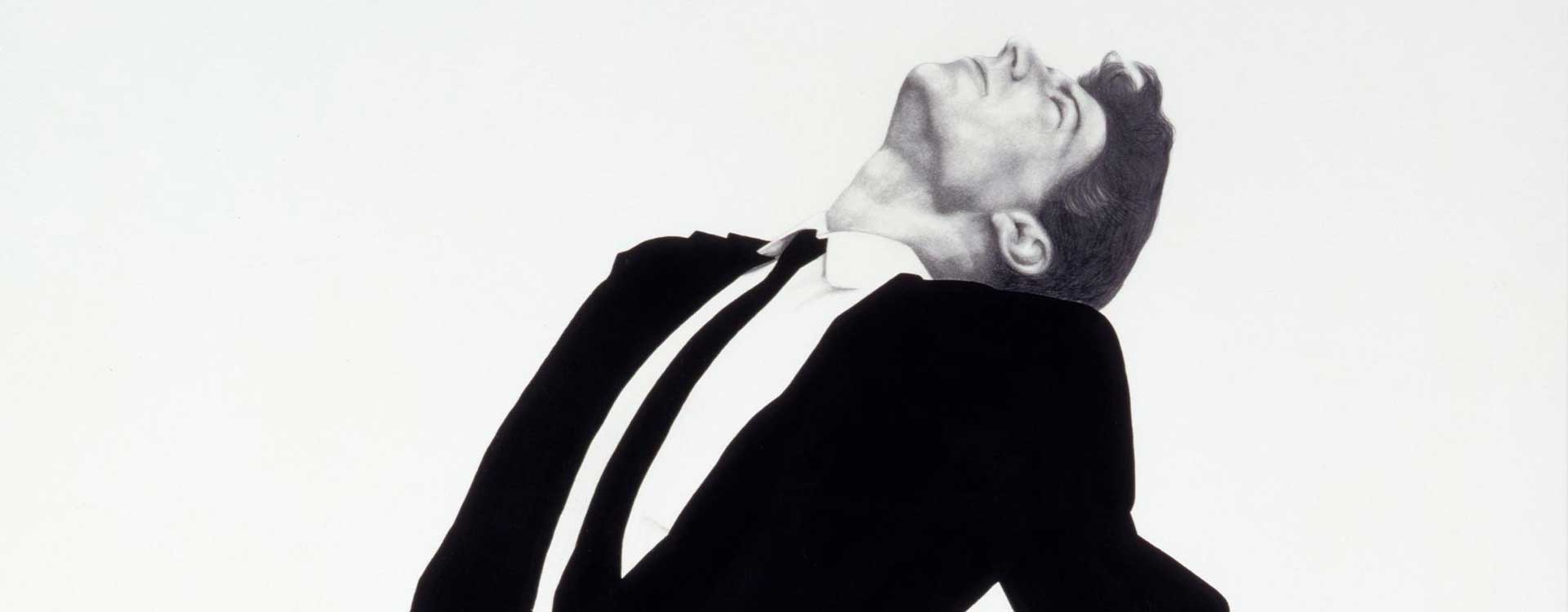
Focus on... "Men in the Cities" by Robert Longo
From the walls of the psychopathic golden boy’s apartment in the cult film American Psycho (2000), to the opening credits of the hit series Mad Men (2007–2015), and even Apple ad campaigns, the iconic Men in the Cities have been endlessly quoted, copied, and repurposed—so much so that their creator says he has, at times, lost his claim to them. This sense of dispossession, a symptom of image overconsumption and the constant recycling of visual culture by mass media, has been at the heart of Robert Longo’s obsessive dissection since the late 1970s.
Whether in a Bottega Veneta ad campaign in 2010–2011 or a 2024 shoot with Nicole Kidman, Longo’s own visual codes—drawn from the photographs on which he based some fifty charcoal drawings between 1977 and 1982—continue to resurface. Their reproducible, almost communicative nature is hard to ignore. These recent variations reaffirm their destiny as “images of images”, deeply infused with the visual language of film noir. The series began with a single film still: a freeze-frame from Rainer Werner Fassbinder’s Der Amerikanische Soldat (The American Soldier, 1970), capturing the moment a gangster, shot down, is just about to hit the ground.
From the walls of the psychopathic golden boy’s apartment in the cult film American Psycho (2000), to the opening credits of the hit series Mad Men (2007–2015), and even Apple ad campaigns, the iconic Men in the Cities have been endlessly quoted, copied, and repurposed.
But they also channel the twitchy, frenzied energy of live performances by James Chance (and his aptly named band The Contortions), the Ramones, or David Byrne—all on repeat in Longo’s studio at the time. Each figure’s movement was carefully choreographed and staged. Longo’s methods are well known: throwing objects at his models to provoke reflexes, or tying cords around their bodies and yanking them like puppet strings.
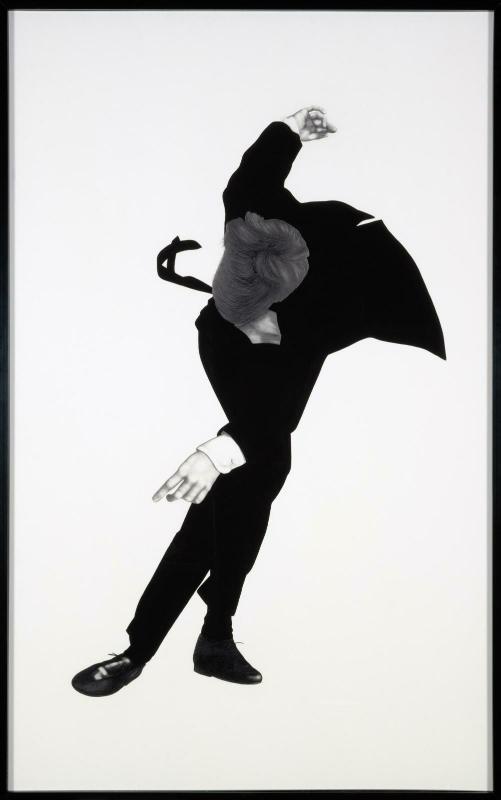
Men in the Cities (Triptych Drawings for the Pompidou), 1981 - 1999
Fusain, mine graphite et peinture synthétique sur papier collé sur médium, 242 x 150 cm
© Adagp, Paris
Philippe Migeat - Centre Pompidou, MNAM-CCI
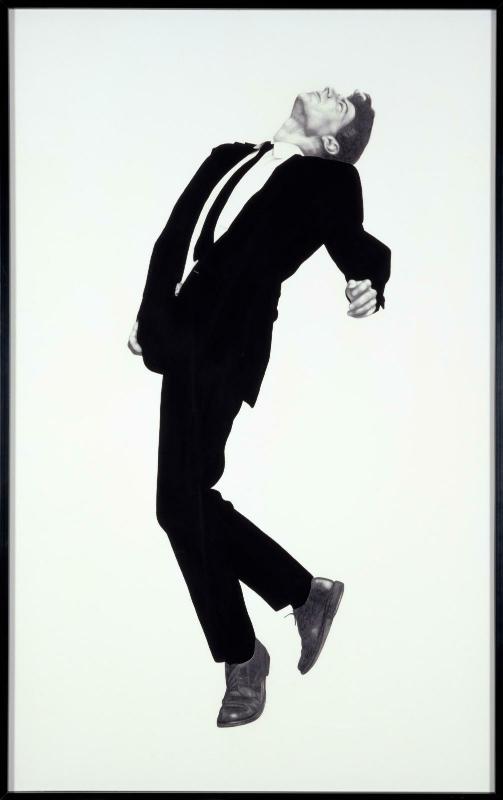
Men in the Cities (Triptych Drawings for the Pompidou), 1981 - 1999
Fusain, mine graphite et peinture synthétique sur papier collé sur médium, 242 x 150 cm
© Adagp, Paris
Philippe Migeat - Centre Pompidou, MNAM-CCI
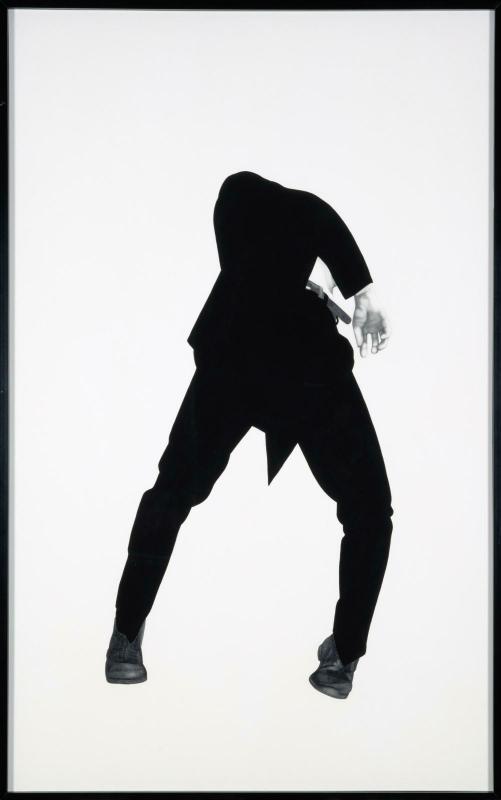
Men in the Cities (Triptych Drawings for the Pompidou), 1981 - 1999
Fusain, mine graphite et peinture synthétique sur papier collé sur médium, 242 x 150 cm
© Adagp, Paris
Philippe Migeat - Centre Pompidou, MNAM-CCI
- 1 (copie 7)
- 2 (copie 8)
- 3 (copie 6)
Transposed into charcoal, these anonymous figures—elegantly bound in paroxysmal poses that hover somewhere between ecstasy, agony, and dance—become abstract symbols of a social class: that of the New York yuppie and their hubris. “White people […] just doomed souls. People who built the buildings that were going to fall on them,” said Robert Longo. Monumentalised, these otherwise ordinary forms are elevated to the status of history paintings. Their XXL scale taps into the American ethos of “bigger is better,” but also into the epic mythology of Abstract Expressionism, which Longo considers the first truly major American art movement.
When you draw an image, […] you burn it. It becomes part of every molecule in your body, and then you spit it back out to project it onto a surface. It’s a transmutation.
Robert Longo
A compulsive draftsman since childhood, Longo has pushed his hyperrealist virtuosity to break drawing free from the narrow framework it’s often confined to—small-scale, preparatory, subordinate to painting. His aim is to put drawing in direct competition with other mediums. It’s a visceral practice, and the polish of his finished works should not obscure the physical intensity behind them. One visitor to his studio once compared the coating of charcoal dust covering the artist’s body and every inch of his workspace to the clay that seemed to cling to Alberto Giacometti—as if the artist himself were made of it. This physical engagement is echoed in the alchemical metaphor Longo uses to describe his creative process: “When you draw an image, […] you burn it. It becomes part of every molecule in your body, and then you spit it back out to project it onto a surface. It’s a transmutation.” ◼
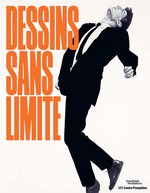
Text excerpted from the exhibition catalogue Dessins sans limite. Chefs-d'œuvre de la collection du Centre Pompidou
(Co-published by GrandPalaisRMN and the Centre Pompidou)
Related articles
In the calendar
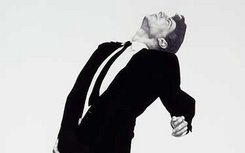
Robert Longo, Men in the Cities (Triptych Drawings for the Pompidou), 1981 - 1999
© Adagp
© Centre Pompidou, Mnam-Cci