AR(t]CHIPEL Festival
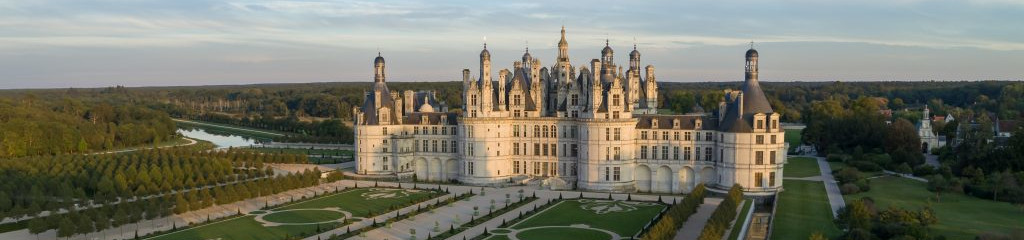
For the fourth consecutive year, works from Centre Pompidou’s collection are being made available to partner venues—museums, châteaux, art centres—as part of Nouvelles Renaissance[s], the cultural and tourism season of the Centre-Val de Loire Region. The festival AR[t]CHIPEL offers a wealth of encounters between cultural heritage, historical landmarks, and contemporary artistic creation – this year focusing on two major artists, Alexander Calder and Max Ernst.
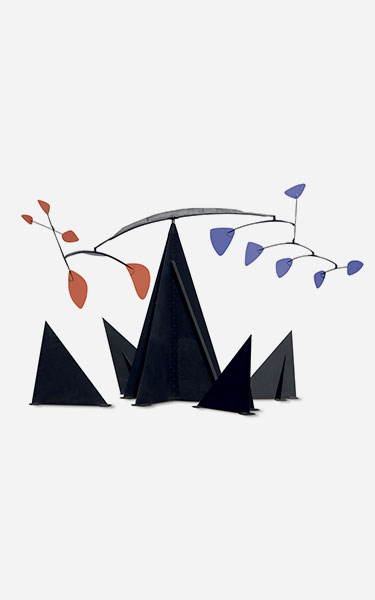
© Calder Foundation, New York / Adagp, Paris
Prochainement
Calder au cœur de la France
À partir du 15 octobre 2026
15 lieux
Très attaché à la France tout au long de sa vie, le sculpteur américain Alexander Calder (1898-1976) s'établit en 1954 dans le village de Saché où il construit son atelier en surplomb de la vallée de l'Indre. Trouvant là une terre d'expérimentation libre, il y conçoit nombre de Stabiles, ses monumentales sculptures en toile rivetée.
Pour célébrer le centième anniversaire de son installation en Val de Loire et le cinquantenaire de sa disparition, le festival Ar(t)chipel propose une exposition d'envergure, à l'échelle de toute la région et dans une quinzaine de lieux culturels, monuments historiques, musées et centres d'art. Un parcours qui permet d'embrasser toutes les facettes de l'œuvre de Calder, de la sculpture au dessin, des arts décoratifs aux pièces monumentales.
| Une programmation Région Centre-Val de Loire x Centre Pompidou
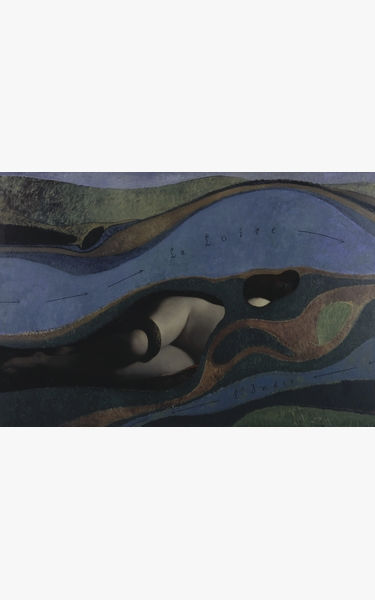
© Adagp, Paris. Photo : Jean-Claude Planchet - Centre Pompidou, MNAM-CCI
Prochainement
Max Ernst. De Natura
3 octobre 2026 – 28 février 2027
Domaine de Chaumont-sur-Loire
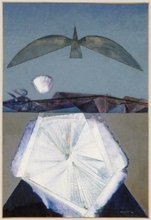
À travers une trentaine de tableaux issus de la collection du Centre Pompidou, le festival Ar(t)chipel célèbre le cinquantième anniversaire de la disparition du peintre surréaliste Max Ernst (1891-1976), installé en Touraine à partir de 1955.
L’exposition « De natura » invite à parcourir l’univers de Max Ernst comme un territoire mental, où le végétal, le minéral et l’imaginaire se répondent sans hiérarchie, dans un continuum poétique. Les forêts, jardins, formations organiques ou minérales y apparaissent moins comme des motifs que comme des processus, des états de transformation où le monde extérieur se mêle étroitement aux mécanismes de l’imaginaire. Au Domaine de Chaumont-sur-Loire, ce dialogue prend une dimension singulière : de la Loire au rêve, le paysage réel se prolonge en paysage intérieur, et l’expérience sensible de la nature devient fiction.
| Une programmation Région Centre-Val de Loire x Centre Pompidou
Œuvres du Centre Pompidou
présentées dans cette exposition

Nouvelles Renaissance[s]! is a dynamic initiative led by the Centre-Val de Loire Region, bringing together and supporting stakeholders in culture, tourism, and gastronomy to create a rich, year-round cultural and tourism season. Since 2019—the year marking the 500th anniversary of the Renaissance in the Centre-Val de Loire—Nouvelles Renaissance[s]! has sparked a creative energy throughout the region, working to make culture more accessible to all audiences.
Launched in 2023, the festival AR[t]CHIPEL. A Journey into Contemporary Creation is the result of a unique collaboration in France. It highlights both the cultural and artistic heritage of the Centre-Val de Loire and the multidisciplinary richness of Centre Pompidou's collection. The shared ambition of Centre Pompidou and the Region is to engage with new audiences and contribute to broader access to contemporary art and culture, while diversifying approaches to mediation and arts education by more actively involving the public in cultural projects.
The festival is built around five core pillars:
- Hosting works from Centre Pompidou in unexpected venues across the Centre-Val de Loire Region;
- Opening up creative spaces to offer behind-the-scenes glimpses into artists' practices;
- Showcasing artists from previous editions in other departments of the Centre-Val de Loire Region;
- Highlighting private contemporary art collections;
- Involving local youth through educational workshops with artists and/or cultural mediators, or through the creation of artworks.