International
Since its creation, Centre Pompidou has positioned itself as an institution that is both firmly rooted in the city and resolutely international in its outlook.
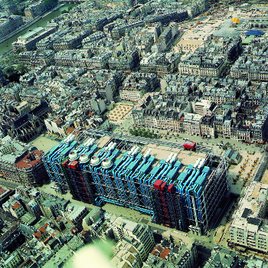
One need only think of its architecture: "a place for all people", in the words of Richard Rogers; a space for sharing and encounter; an institution deliberately conceived without barriers.
The decision to entrust the direction of the Musée national d’art moderne in 1973 to Pontus Hultén, a Swedish museum director with a cosmopolitan vision, bears witness to this ambition. For him, the purpose of the newly created Centre Pompidou was to "place Paris at the heart of cultural exchanges" and to engage French artistic creation in a constant dialogue with the international scene. This positioning began to take shape with the inaugural exhibitions – "Paris-New York" (1977), "Paris-Berlin" (1978), "Paris-Moscou" (1979) – which laid the foundations for a connected museum, attentive to the intersections between avant-garde movements, territories and disciplines. It was further pursued through other exhibitions of equally significant scale, explicitly focused on non-Western scenes: "Magiciens de la terre" (Magicians on the Earth – 1989), "Alors la Chine?" (What About China? – 2003) or "Africa Remix" (2005).
The collection of the Musée National d’Art Moderne follows this same principle. Heir to the "Galerie royale du Luxembourg, intended for living artists" and to the Musée national des Écoles étrangères contemporaines, it is composed in equal measure of artists from the French scene and international artists.
As a key player in exchanges between museum institutions worldwide, Centre Pompidou pursues an active loans policy, lending around 6,000 works each year in broadly equal proportions within France and internationally.
It was at the end of the 1990s, in the broader context of the transformation of cultural institutions and an increase in the importance of network logic—and facilitated by a temporary closure for renovation works—that Centre Pompidou’s international action became more clearly structured around travelling exhibitions, dissemination of its scientific and cultural expertise, and the development of its own resources.
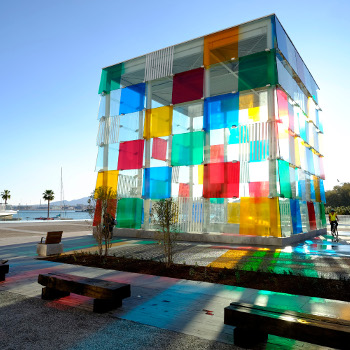
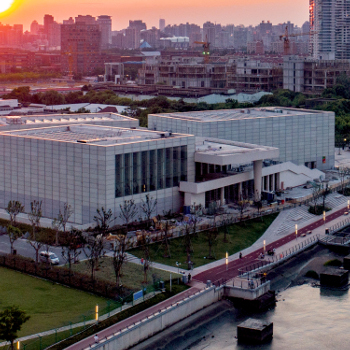
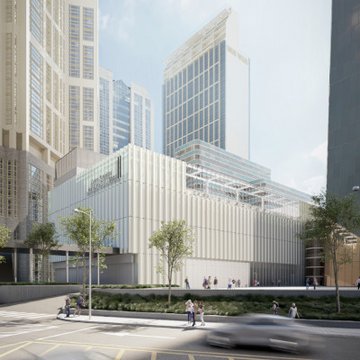
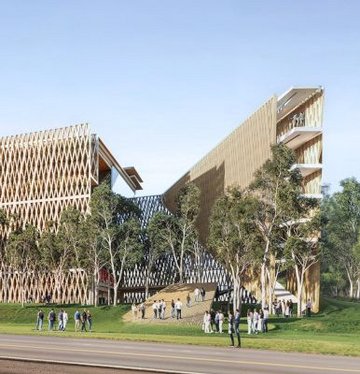
This openness to the world—central to Centre Pompidou's identity—has taken on a new scale over the past decade through the implementation of an ambitious and original model of international development, that sets it apart in the global museum landscape. This momentum began in 2015 with the opening of the first Centre Pompidou outside France, in Málaga, followed in 2019 by a project in Shanghai. It is now gathering pace with three new sites: Seoul, inaugurated in June 2026; Brussels, to open in November 2026; and Foz do Iguaçu, Brazil, scheduled for 2028.
These initiatives offer opportunities not only to strengthen Centre Pompidou’s presence on a global scale, but also to forge lasting links with local art scenes, which in turn feed into and enrich its collection and expertise. Rejecting the idea of exporting a fixed model, Centre Pompidou develops projects based on customised collaborations, tailor made to each context—whether in terms of architecture, through new constructions such as Foz do Iguaçu or the rehabilitation of existing sites in Brussels, Málaga or Seoul; or in terms of culture, through programmes conceived in close dialogue with local stakeholders and attuned to the social, cultural and economic issues of the territories concerned. Rather than permanent centres, Centre Pompidou favours medium-term collaborations. This agile approach is well suited to encouraging the emergence of new cultural stakeholders, as enables public and private partners to make commitments in line with their resources and gives them the opportunity to take up the torch after a few years.
Cultural engineering
As France’s national modern and contemporary art center, home to one of the world’s two largest collections in modern & contemporary art, Centre Pompidou develops partnerships with museums, art centers, public administrations and private companies.
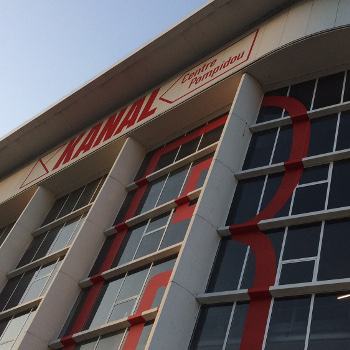
With decades of experience in travelling exhibitions, co-creating dedicated spaces for art and culture – from Metz in 2010 – as well as designing innovative and local mediation projects, spaces and programmes for public or private partners, Centre Pompidou has acquired a vast array of experiences in all fields of cultural expertise.
Nearly fifty years after it first opened, Centre Pompidou is embarking on a major programme of renovation, both architectural and cultural. As this undertaking requires the closure of its building from summer 2025 to 2030, Centre Pompidou is turning a constraint born of necessity into a powerful means of outreach, strengthening its role as a catalyst for intercultural dialogue and the promotion of modern and contemporary art on the global stage.
Building on a long-standing practice of lending works — some 6,000 loans per year, 50% of them to institutions abroad — and on the export of its expertise in cultural engineering, this transitional period enables Centre Pompidou to make accessible to international audiences an artistic wealth that would otherwise remain in storage. It does so through the circulation of a series of exhibitions, each systematically adapted to the venue, the audience and the cultural context of the partner institution hosting it. This period also offers Centre Pompidou the opportunity to consolidate the partnership policy it has developed since 2023, based on a sustainable, tailor-made model of collaboration, grounded in listening, exchange and co-construction, with other museums and institutions abroad.
Travelling exhibitions
The first exhibitions presented as part of the Constellation programme are conceived from the holdings of the Musée national d’art moderne, whose breadth makes them both precious and unique. They are devoted to emblematic movements of modernity, such as Cubism and Surrealism, as well as to major figures of 20th-century art, whether French or artists who lived in France: Wassily Kandinsky, Henri Matisse, Marc Chagall, Constantin Brancusi, Robert and Sonia Delaunay, among others.
The travelling programme, also designed to optimise the movement of works by geographical area, nevertheless makes each of these exhibitions a unique event, adapted to the venue, the audience and the cultural context in which it is hosted. Each project is rooted in the distinctive collaboration established between the host institution and Centre Pompidou, in the possible dialogues between their collections, and in the scientific and technical exchanges between their teams. Each stage thus becomes an opportunity to reinterpret the initial project, further nourishing and enriching research and creation.
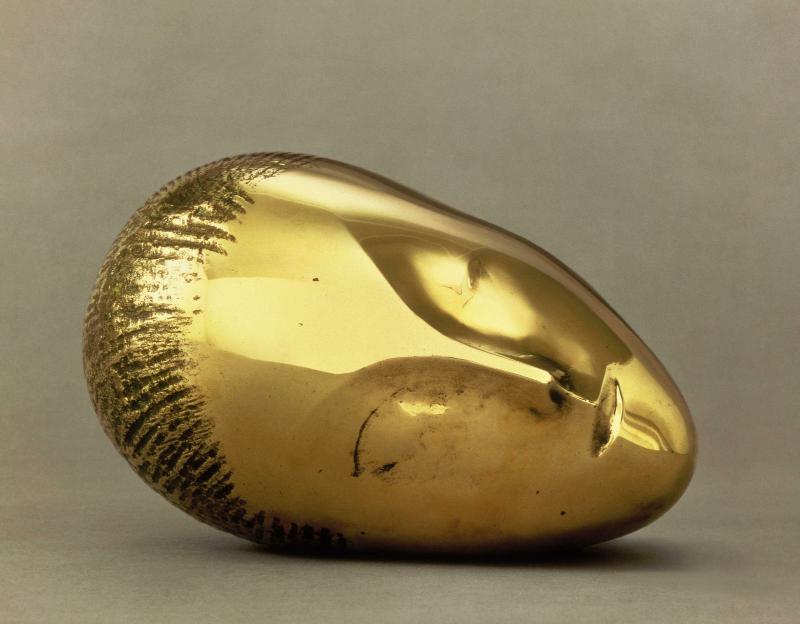
© Succession Brancusi - All rights reserved (Adagp). Photo : Centre Pompidou, Mnam-Cci/Adam Rzepka/Dist. Rmn-Gp
Brancusi
This exhibition will pay tribute to major 20th-century artist Constantin Brancusi (1876-1957), considered to be the father of modern sculpture. Originating from Romania, Brancusi settled in Paris in 1904 after crossing Europe, and upon his death, chose to bequeath his entire Parisian workshop to France. This project has been put together from this benchmark collection.
The exhibition will show how he exalted simplicity in shapes, all the better to express "the very essence of things", looking beyond mere appearance to achieve a universal language. This quest paved the way to abstract art, yet paradoxically was not devoid of ambiguity. The elementary geometry of Brancusi’s signature shapes (eggs, crosses, spirals etc.) was constantly paced by layering, energised with contrasting materials and the fascinating interplay of reflections that absorbed both the surrounding space and onlookers.
Following the themed circuit of the exhibition, visitors will be able to view major sculptures, repeating the themes and motifs (heads, kissing couples, torsos, female portraits and animals) that the artist was to explore unceasingly for several decades. The exhibition will emphasise both the variety of materials used (bronze, stone, wood and plaster) and the artist’s creative process: direct carving, the aesthetics of fragments, the simplifiction of shapes, the use of plinths etc. The exhibits will be rounded off with a set of films and photoaphy by the artist, highlighting his approach to sculpture as "form in motion".
There may also be a virtual visit of Brancusi’s workshop, fully digitised in HD by the Centre Pompidou. This extra content will give visitors a unique, immersive experience at the heart of a legendary venue for modern art history. In the words of his friend Man Ray: "When you enter Brancusi’s workshop, you enter another world."
Curator: Ariane Coulondre, curator, Centre Pompidou – Musée national d’art moderne
Robert and Sonia Delaunay, endless rhythm
Among the great sets of monographs that make up the Musée National d’Art Moderne’s collection, those featuring the works of Robert and Sonia Delaunay are especially stunning. The collection was put together in close collaboration with the artists, starting in 1935. The "Endless rhythm" project draws on the wealth of this collection comprising paintings, drawings, reliefs, mosaics, book bindings, decorative arts, mock-ups and monumental decors for the 1937 Exposition Internationale des Arts et des Techniques, and many documentary photographs.
The exhibition starts out with the artists' early works, already belying an attraction to pure colour and geometric decomposition of shapes, through to pre-war formal innovations, marked by the abstract layering of light moving through coloured circles. It then continues with the surprising, spectacular and mostly unknown output of the 1920s, during which the Delaunays worked on sets for cinema; Sonia also launched a boutique and a sewing workshop. The two painters also worked in architecture: the works they produced for the Palais des Chemins de Fer and the Palais de l’Air caused a sensation at the 1937 Exposition Internationale in Paris.
Comprising some 60 to 80 works, often in huge, spectacular formats, as well as photographs and film, this exhibition explores the Delaunays' aspiration as a couple to merge art and daily modern life.
Curator: Angela Lampe, curator, Centre Pompidou – Musée national d’art moderne
Chagall, charting a separate course
The last of the giants from the heroic era of modern avant-gardes, Marc Chagall, expired just two years before his centenary, on 28 March 1985. He was one of the greatest painters of figuative art in the 20th century. And, above all, one of the greatest colourists. Like few others, this Jewish artist managed to blend east and west in an amalgamation of his Russian origins, his memories of his birth town Vitebsk and the pictural innovations emanating from cubism, to form a powerful language, at once simple and complex, in which art and life were intimately mingled. Rejecting all forms of orthodoxy, Chagall ever remained on the fringe of movements, closer to poets than other artists, with an independent style that absolutely cannot be fitted into ay box.
The exhibition will highlight this unique course. In six chapters, it will recount Marc Chagall’s career, starting with his birth in Vitebsk to a modest Jewish family in 1887, with not a hint of his future career as an artist of global repute. The exhibition will feature some 55 paintings and nine sculptures, as well as filmed interviws with Chagall, documentary films and a selection of photogaphs.
Curator: Angela Lampe, curator, Centre Pompidou – Musée national d’art moderne
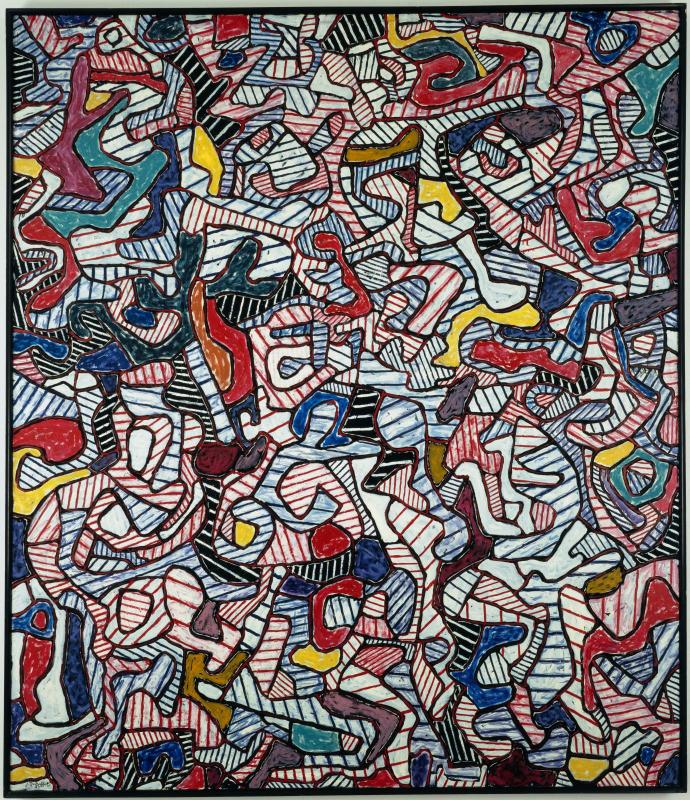
© Adagp, Paris. Photo : Centre Pompidou, Mnam-Cci/Jacques Faujour/Dist. Rmn-Gp
Jean Dubuffet. Retrospective
As a prolific artist and painter paying no heed to convention, whether in society or art, Jean Dubuffet made non-savoir a principle with which to create a singular body of work, organised as successive series, the most significant of which will be exhibited in this retrospective.
The "first works" that Dubuffet listed as such, those produced as from 1942, showed the painter’s interest for children’s drawings, graffiti and outsider art. He coined French term for outsider art ("art brut") in 1945 to designate the artistic production of people from outside the world of culture. He studied it and collected it diligently, seeking himself to reach this deconditioned state, in order to change the perspective put forward, his vision of things and the world. Parallel to his painting career, he also wrote a founding declaration to explain his "anticultural positions", also showing a preference for the company of writers rather than artists. The portrait of one of them, Dhôtel nuancé d’abricot, 1947, is emblematic of his renouncement of all aesthetic order: characteristic frontality, a clumsy hand, freewheeling use of colour and non-art materials. The series "Corps de Dames", including the dazzling Métafizyx, 1950, empowered the artist to cross another line jeopardising figures in favour of painting, now the subject of the work.
Ever seeking out pictural inventions, Dubuffet illustrated his research in major series: "Matériologies", such as the majestic Messe de Terre, 1959-1960, "Phénomènes", a major set of lithographs produced from 1958 to 1963, "Paris Circus", illustrated by the joyful Rue passagère, 1961, expressing the colourful bustling of the city. Then we come upon a vast series, "L’Hourloupe", which introduced a whole new language, featuring shapes, some coloured in, some hatched, in a limited colour range (black, white, red, blue). "L’Hourloupe" was to occupy Dubuffet for twelve years, from 1962 to 1974.
The artist produced several other major series in the course of his career, such as the "Psycho-sites" and the "Mires", with in particular the stunning, vigorously painted Cours des choses, 1983. Each time he reinvented a vision of the world calling perception into question, through to his ultimate series "Non lieux", wrapping up a radical body of work, among the most audacious in art history in the 20th century.
Curator: Sophie Duplaix, curator, Centre Pompidou – Musée national d’art moderne
Fernand Léger, painter of the modern world
This exhibition will be devoted to the fascinating personality of Fernand Léger, who painted the city and modern life, celebrating the great changes of his era.
Very early on, Fernand Léger noticed the great contrast and intensity of modern life: the sight of the ever-changing cityscape, the noise and speed of machinery and cars, the colour of advertisements on the walls and manufactured products invading shop windows. Initially influenced by cubist aesthetics, Fernand Léger soon broke free from artistic convention and sought to depict this fragmentation of vision and the syncopated beat of a booming society. Renewing himself throughout his career, he reacted to the saturation of images, with a quest for visual impact and colourful audacity, guided by the aesthetic of contrast heightened to the limit.
The exhibition retraces the painter’s career from the 1910s to the 1950s, drawing the portrait of a curious man, fascinated by his times. Featuring around 100 of the artist’s major works, this event explores the ties maintained throughout his career between his output and poetry, film, architecture and the performing arts with his many artistic collaborations. It will also draw attention to the ever-current nature of his painting, seeking to conciliate the requirements of a new plastic language to a truly popular dimension. Many documents from the archives will reveal the various facets of his work and will show the man as he was: the theoretician of painting, the tireless teacher in the workshop that trained many artists, the traveller with unusually keen powers of observation and the artist committed to social progress.
Curator: Ariane Coulondre, curator, Centre Pompidou – Musée national d’art moderne
At home with Matisse
A fresh start for painting: Matisse 20/21th century
The exhibition takes visitors on a journey that the artist himself took – following the whims of his influence on homes and lands both real and imaginary in 20th century creation, in contact with the international avant-gardes. With Henri Matisse, as well as after him.
Some 30 paintings, all Matisse masterpieces, have been placed for the fist time alongside a selection of the works from the Centre Pompidou collection. The conversation around this painting "tirelessly started afresh" highlights major figures from the 20th and 21st centuries. From Sonia Delaunay to Natalia Goncharova, not forgetting Daniel Buren, the exhibition aims to explore kinship ties with Matisse which have yet to be imagined. These ties may be contemporary to Matisse like the Russian scene and Jean Pougny (Ivan Puni), or the account of his first trip to Algeria in 1907 and the importance of the notion of global decoration, as reactivated by Baya (née Fatma Haddad).
But the exhibition also hopes to explore the ties addressed in Matisse’s work such as the role of female models as objects of desire in Zoulika Bouabdellah’s work. In the video Dansons (2003), addressing the post-colonial dimension of the feminine imaginary, Bouabdellah suggests another take on the place of women’s creative output after Matisse, via the theme of dance, this most Matissian theme.
"At home with Matisse". One might put forward the hypothesis that the name of the artist is a place in which to live and Matisse is to be understood in his historic dimension as much as in our present, like a perpetual fresh start for painting, this medium that he always used to call the "summit of his desire".
Curator: Aurélie Verdier, curator, Centre Pompidou – Musée national d’art moderne
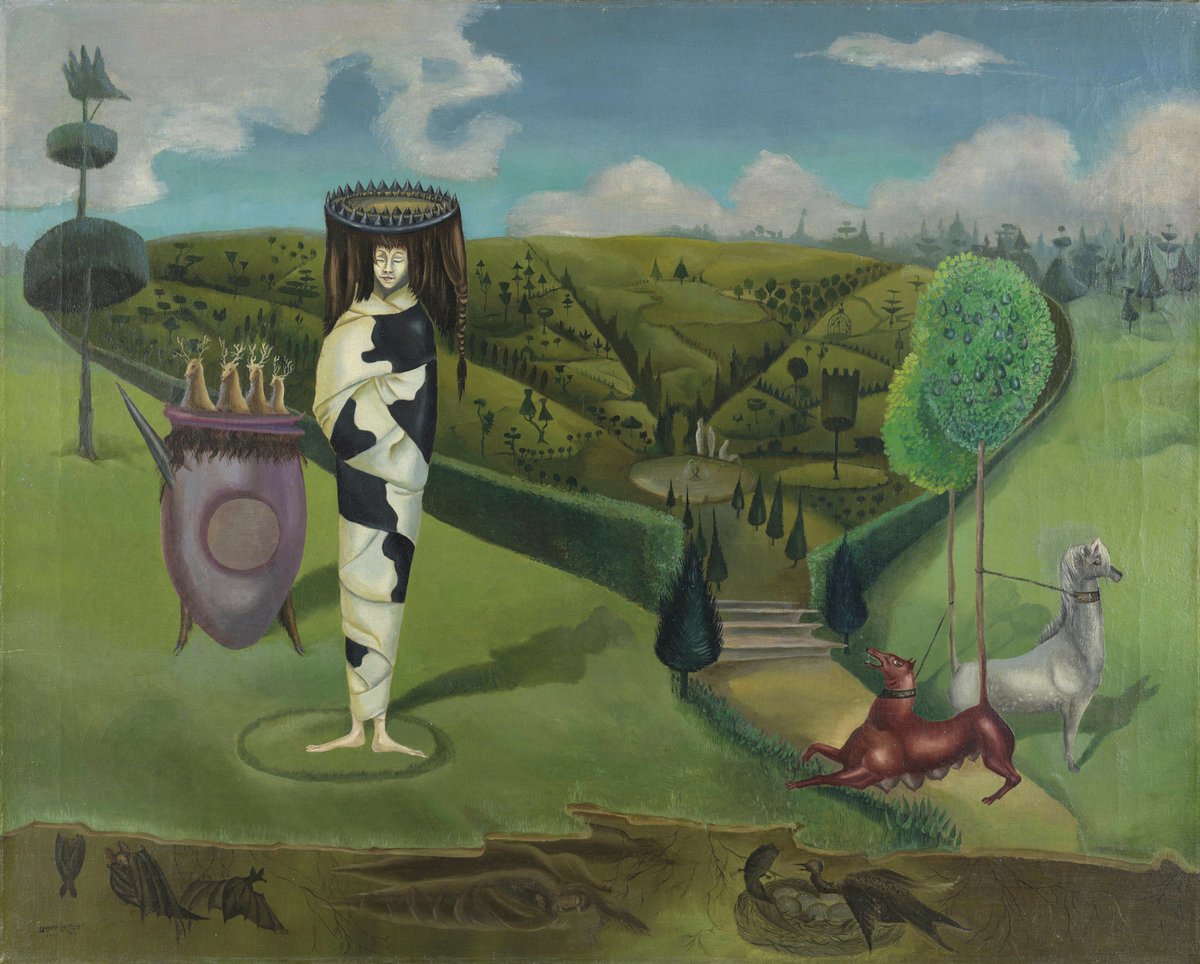
© Adagp, Paris, 2024. Digital image, The Museum of Modern Art, New York/Scala, Florence
Mapping Surrealism
The importance of Paris in Surrealism and the ties maintained with André Breton nd his heirs, have helped the Centre Pompidou put together the greatest collection worldwide of Surrealist works. Drawing on this collection, stupendous from all standpoints, the exhibition "Mapping Surrealism" retraces the adventure of this movement, from its invention in 1924 to the last public events held in the mid-1960s.
The exhibition has been designed according to the great poetic principles which shaped the definition of Surrealist inspiration (tapping into the unconscious, dreams, popular art forms and the creation of deviants and "mediums"). It looks back at the technical inventions which made it possible to open creation to these new forces: the invention of "automatic" art, collective activity, the collage technique and the place of objects. The exhibition will retrace the milestones in Surrealist art as it constantly reinvented itself, spreading across the world, from Prague to Mexico and from Martinique to New York. In keeping with the multi-disciplinary exhibitions which have forged the Centre Pompidou’s fame, it will especially highlight the Surrealists' interest in poetry, literature, film and photography.
Curators: Didier Ottinger, deputy director of the Musée national d’art moderne and Marie Sarré, curator, Centre Pompidou – Musée national d’art moderne
Vassily Kandinsky, pioneering abstract art
The work of Wassily Kandinsky (1866-1944), one of the greatest 20th-century artists, has long been considered to be the first expression of non-figurative art in the early 20th century. While it has now been acknowledged that there are multiple origins of abstract art, the decisive contributions of this artist of Russian origin to the idea of "autonomous" art, breaking free from any reference to the outer world, shines through in his theoretical work and in his role as an instigator, publisher and teacher.
Thanks to donations and the succession of his widow Nina Kandinsky, the Centre Pompidou conserves the most complete collection of works by this artist.
This retrospective retraces his extraordinary career in Russia, Germany and France. In five chapters, the exhibition examines his figuative beginnings, the genesis of abstract art in Munich, his return to his birth country Russia during the revolutionary years, his stint as a Bauhaus teacher and his last years in Paris. A major installation will be presented for the fist time in the Netherlands: the reconstruction of a reception hall that Kandinsky designed in Berlin in 1922. This reconstitution offers visitors the impression of actually being part of one of his paintings.
Curator: Angela Lampe, curator, Centre Pompidou – Musée national d’art moderne
New pluri-annual partnerships
In order to circulate its travelling exhibitions around the world, Centre Pompidou is entering into new partnerships, chosen according to a twofold imperative:
- to establish a medium-term presence among new audiences and alongside friendly institutions, which become teammates over the course of successive projects;
- to optimise the movement of works by geographical area, with a view to their ecological impact, as well as the number of venues for each exhibition, for reasons of preventive conservation.
The same applies, in particular, to Fundación La Caixa in Spain. A long-standing partner institution, it signed an initial agreement in 2019, which was renewed in 2023 for a five-year period. Its network of Forums across Spain will first host a major exhibition on Matisse, followed by one on optical art. Further north in Europe, Amsterdam's H'ART Museum will present four major retrospectives by 2028. In Japan, three projects will be launched from 2029 thanks to the partnership with the Asahi Shimbun group; in Oceania, three others will be presented at Auckland Art Gallery, the largest museum in New Zealand.
The monographic exhibitions drawing on Centre Pompidou’s huge collection of modern art are just one aspect of international exchanges.
Despite a moratorium needed to handle collection transfers in preparation for the building works, Centre Pompidou will be participating in major events of its long-standing partners such as MoMA, teaming up with the Philadelphia Museum of Art for the Marcel Duchamp retrospective in 2026, the Metropolitan Museum of Art for Man Ray and the Peggy Guggenheim Venice collection for Vieira da Silva.