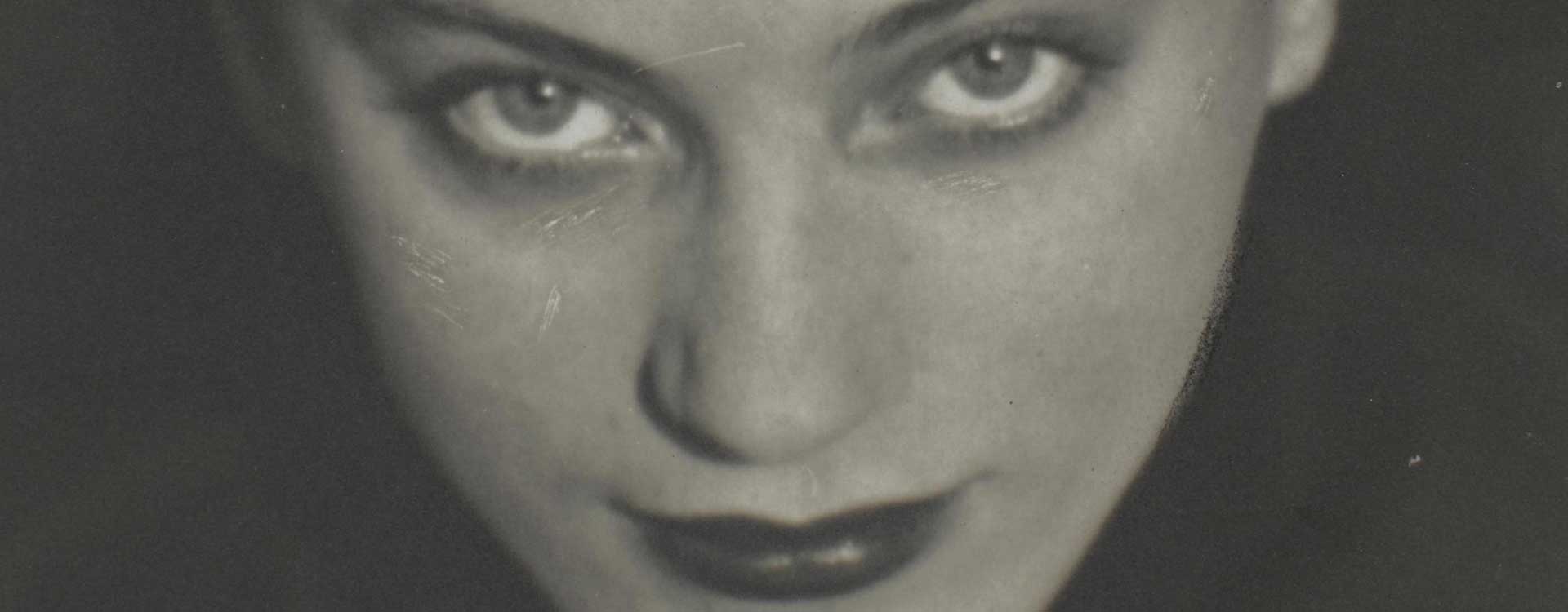
Focus on... “Lee Miller tête renversée” by Man Ray
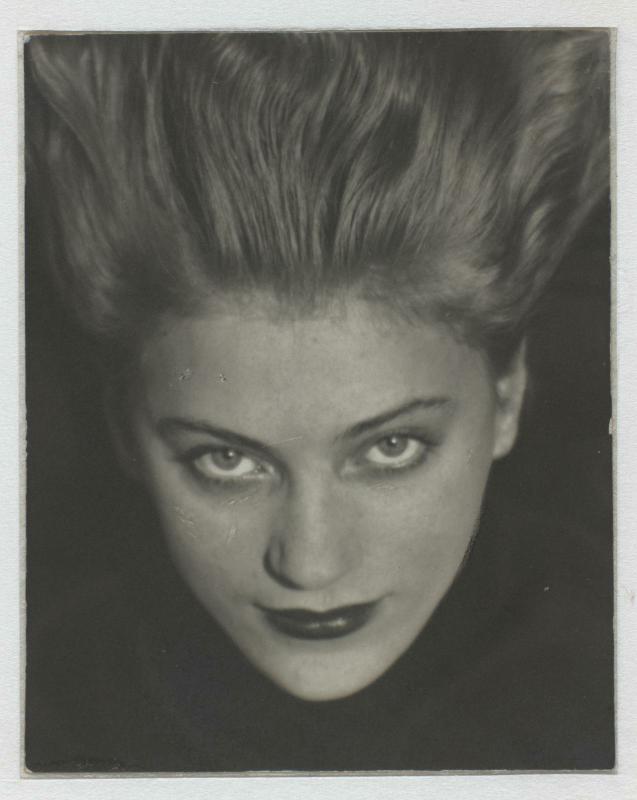
In this portrait, made by Man Ray around 1930, Lee Miller appears with her head thrown back. A face, an angle, a play of light: little more is needed to produce the subtle unease so characteristic of Surrealism. Yet what makes the image so compelling today is not only its formal elegance, but what it suggests of a pivotal moment. For Miller was not merely the woman being looked at, by then, she was already becoming the one who looked.
For decades, Lee Miller has been remembered as the muse: Man Ray’s model, collaborator and companion in Surrealist Paris. The shorthand is convenient. It is also incomplete. Born in Poughkeepsie, NY, in 1907, Miller grew up in a wealthy family and discovered photography early on through her father. After studying painting and drawing in New York, she launched a successful modelling career, appearing in Vogue and posing for Edward Steichen. Yet posing was never enough. When she arrived in Paris in 1929 and met Man Ray, she did not simply step in front of his lens. She learned the craft, embraced experimentation and immersed herself in the work taking place behind the scenes, from the darkroom to the latest photographic innovations. Before long, she was shaping a vision of her own.
That is what this portrait is all about. It shows a woman still captured by the gaze of others for the most part, but, at the same time, already in the process of crafting her own. In front of Man Ray’s lens, Lee Miller enters the Surrealist imagination, but she does not disappear into it. Instead, she carves out a singular position of her own. As the American photographer’s assistant and model, both for commissioned assignments and experimental work, she learned the techniques of photography and darkroom manipulation at a time when rayographs, unconventional framing and daring experiments with light were redefining the medium. Alongside Man Ray, she helped develop the technique of solarisation, in which a print or negative is briefly re-exposed to light during processing, creating a distinctive halo effect. In 1931, she collaborated with him on Électricité, the advertising portfolio commissioned by the Paris electricity company, now regarded as one of Surrealism’s landmark publications.
When she arrived in Paris in 1929 and met Man Ray, she was not content with simply posing: she learned, experimented, took part in the darkroom work, and became fully involved in photographic research.
Lee Miller soon established an artistic independence that would shape the course of her career. She began publishing her own photographs —modernist fashion images with bold contrasts—, alongside more enigmatic compositions assembled from unexpected associationsanatomical fragments, mannequins, shop-window displays and carousel horses. In 1932, the same year she appeared in Jean Cocteau’s The Blood of a Poet, she returned to New York and opened her own studio, which quickly earned a reputation of its own.
I’d rather take a picture than be one.
Lee Miller
Miller’s photographs increasingly explored the strange undercurrents of everyday life. She was drawn to unexpected juxtapositions, unsettling forms, and photography’s ability to make the familiar seem suddenly unfamiliar. Yet commercial success never pulled her away from the avant-garde. Instead, her career took another turn. After a period in Cairo, she returned to Europe and began working as a photographer for Vogue before becoming a war correspondent during the Second World War.
In the winter of 1942, Miller became one of the very few women photographers accredited by the US military. She documented the Blitz, the Liberation of Europe, and, later, the horrors of Dachau and Buchenwald. Her work shifted from Surrealist experimentation to historical witness, without ever losing its intensity.
One image, taken on 30 April 1945, has become emblematic. Photographed by David E. Scherman, her colleague at Life, Miller sits naked in the bathtub of Adolf Hitler’s Munich apartment on the very day of his suicide. Beside the tub, on the immaculate bathmat, stand her mud-caked army boots.
That is what gives this portrait its resonance today. What we see is not simply a figure from 1930s Paris. It is an artist in the making—a woman we imagine we have captured as an image, just as she is preparing to produce some of the most singular photographs of her time. ◼
Related articles
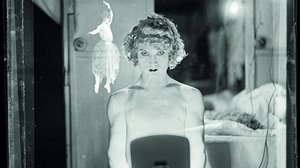
Man Ray, Lee Miller, c. 1930
Gelatin silver print
5.3 × 4.3 cm
© Centre Pompidou, Mnam– Cci / Dist. GrandPalaisRmn
© Man Ray Trust / ADAGP, Paris