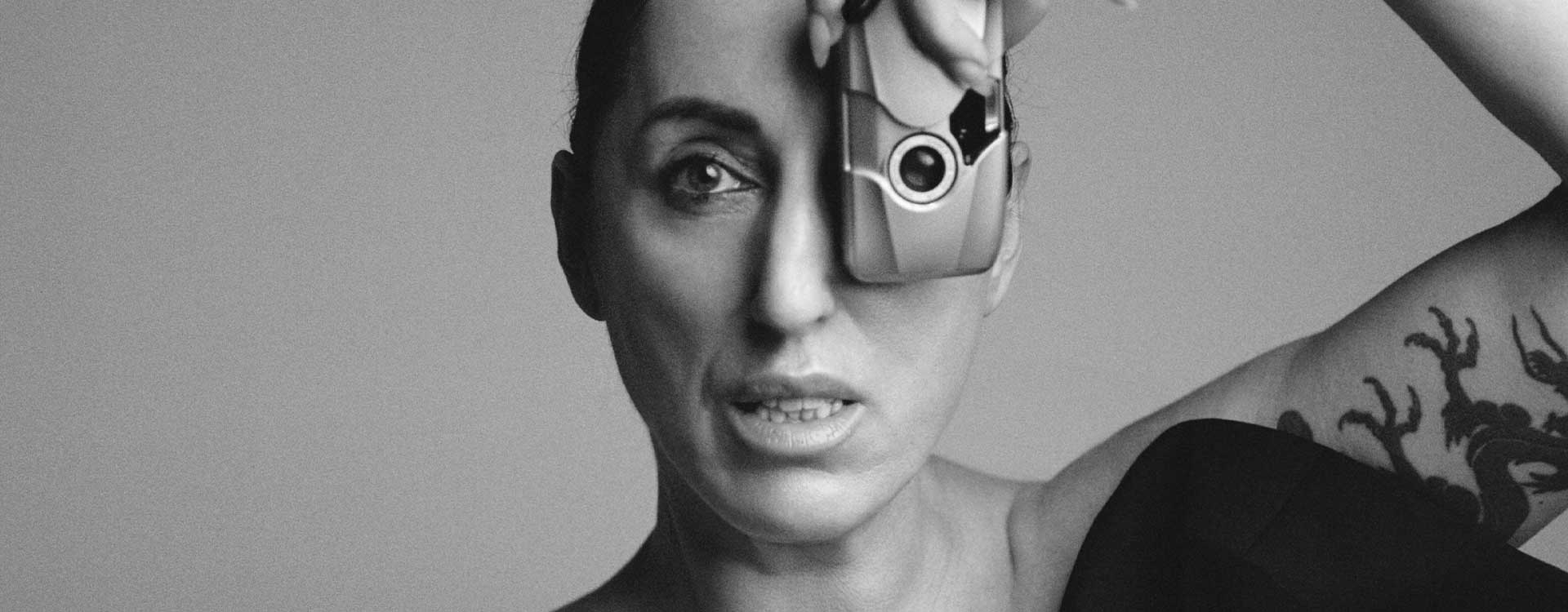
Le Centre Pompidou &... Rossy de Palma
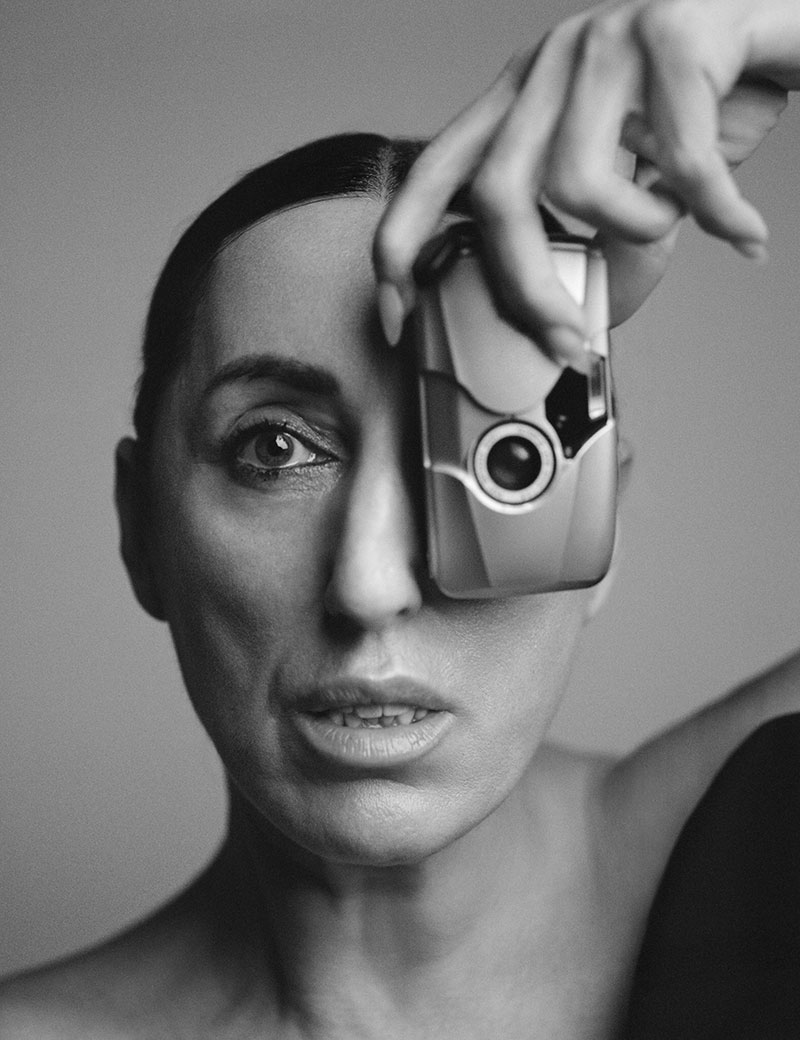
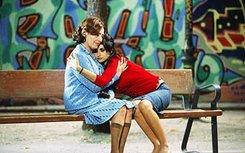
Rossy de Palma belongs to that rare breed of actresses Pedro Almodóvar didn’t simply put on screen – he lodged them in the collective imagination. From Women on the Verge of a Nervous Breakdown (1988), then Tie Me Up! Tie Me Down!, Kika, The Flower of My Secret and Broken Embraces, she emerged as one of the definitive Chicas Almodóvar: a presence that catches the eye and charges a scene with irony, strangeness and tension. With her instantly recognisable profile, her poise, her wit and her absolute freedom, she has become one of the most arresting faces in the Spanish director’s cinema.
Her story with Almodóvar begins in the thick of Madrid’s Movida, in the early 1980s. Rossy de Palma – born Rosa García Echave in Palma de Mallorca in 1964 – was then singing and dancing with the band Peor Imposible when the filmmaker spotted her and cast her in Law of Desire (1987). Very quickly, she spilled beyond that single frame. Jean Paul Gaultier, taken with her extraordinary allure, invited her to walk in 1994 alongside Björk. George Michael cast her in the video for ‘Too Funky’, surrounded by the era’s biggest supermodels. Moving between fashion, music and performance, Rossy de Palma established herself as a true pop figure, one who has cut across decades with her mystique intact. Younger generations have embraced her as a kind of talisman – Rosalía, for one, brought her into the flamenco world of El Mal Querer in 2018. Far from being just an image, Rossy de Palma has also developed a visual art practice of her own, spanning sculpture – in terracotta and wood – and photography. Paris Photo named her guest of honour in 2022, and Le Nouveau Printemps, in Toulouse, appointed her associated artist for its 2026 edition.
With her instantly recognisable profile, her poise, her wit and her absolute freedom, she has become one of the most arresting faces in the Spanish director’s cinema.
As part of the “Pedro Almodóvar, Attachements” retrospective, organised by the Centre Pompidou at mk2 Bibliothèque, Rossy de Palma came to present The Flower of My Secret, released in 1995. In it, she plays Blanca, the sister of the character portrayed by Marisa Paredes – another towering figure in Almodóvar’s world, who died in December 2024. Her appearance placed the actress back within that long-running story just as Pedro Almodóvar’s new film, Amarga Navidad, had been announced for the 2026 Cannes Film Festival. A meeting with an icon.
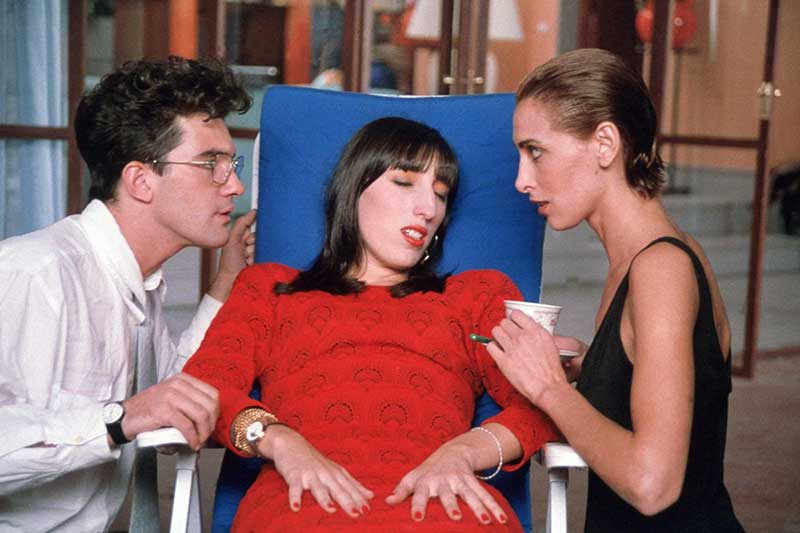
© El Deseo, photo by Macusa Cores
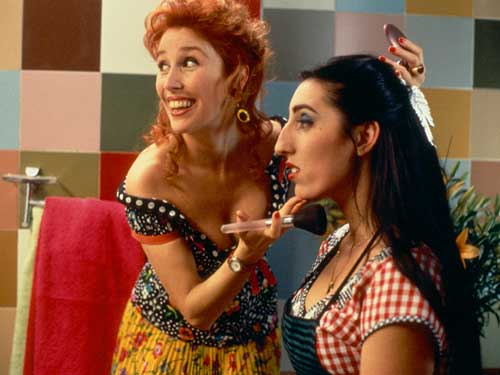
© El Deseo
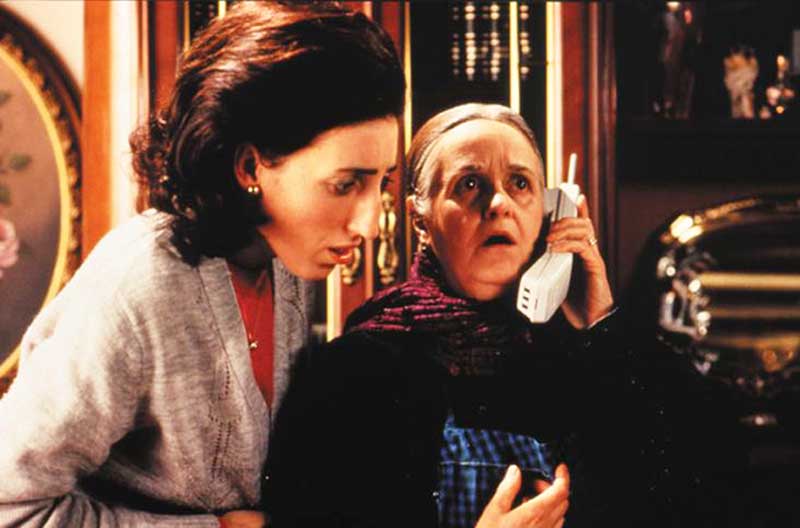
© El Deseo, TF1, photo by Jean-Marie Leroy
- Femmes au bord (copie 2)
- Kika (copie 2)
- fleur (copie 2)
Rossy de Palma – I have so many memories of the Centre Pompidou – I’ve been here countless times! I fell in love with this building the moment I saw it. I recently learned that it is soon to be designated a historic monument, and I’m astonished it isn’t one already. I love that stroke of genius on the part of the architects – something both pragmatic and profoundly artistic – of pushing all the machinery to the outside, of exposing what feels like the building’s “guts”. It’s beautiful, like an open-air laboratory. And then, those colours! It’s also a museum woven into the city itself, with its lively Piazza. Even if you know nothing about art, you can walk in – you feel invited. It’s a building I’ve photographed again and again from the surrounding streets: wherever you stand, you catch sight of it in fragments, in perspective.
I love that stroke of genius on the part of the architects – something both pragmatic and profoundly artistic – of pushing all the machinery to the outside, of exposing what feels like the building’s “guts”.
Rossy de Palma
Very recently, I was supposed to come and see the major exhibition devoted to Surrealism, but unfortunately I couldn’t make it, and I was terribly disappointed. Surrealism has nourished me enormously, just as Dada has. I am a Dadaist and Surrealist creature! I love the work of pioneering women like Leonora Carrington and Georgia O’Keeffe... Today they are fully celebrated artists, but at the time their dreamlike, metaphorical exploration of sexuality shocked people deeply... I’m also a great admirer of Louise Bourgeois. I find joy in her work, even if some of her sculptures can be overwhelming, even frightening, like her monumental spider, Maman. I see in it the image of maternal protection... I think there was something incredibly warm in her personality. Even in her phallic sculptures, there is humour! I almost visited her one day in her New York studio thanks to my friend, the photographer Youssef Nabil, but it never happened – and that remains one of my great regrets.
For me, art is something fundamentally therapeutic, something resilient. In fact, it was through art that I discovered there was an elsewhere. When I was very young, I felt somehow outside the world. One day I came across a Dadaist poem, a calligram in the shape of a dancer’s feet... I never found the title or the author again, but that poem marked me profoundly. You could feel the movement of the dancer in it... It was magnificent. And I said to myself: another world is waiting for me!
I am a Dadaist and Surrealist creature!
Rossy de Palma
I did not exactly come from a family of artists, but my mother, who died last year, had a true artist’s temperament: she painted watercolours as a self-taught artist, and she also sang. She was very modern for her time, with no taboos, and she influenced me enormously. My father, meanwhile, grew up in the mountains of Asturias, in northern Spain. At around 14, he left for the city to become a bricklayer... In the 1960s, during the property boom, my parents moved to Mallorca, in the Balearic Islands, where I was born. My father was an artist without knowing it, in an arte povera or art brut kind of way... He had an artist’s hands. He made things that were pure Gaudí without even knowing who Gaudí was!
I create too – pieces in terracotta, in wood... My universe is really one of performance and visual poetry. In 2015, I created Résilience d’amour for the Piccolo Teatro in Milan, a Surrealist piece in the spirit of Salvador Dalí or Federico García Lorca. There is a Catalan artist I adore, and who has influenced me tremendously: Joan Brossa, a poet who was very close to painters like Joan Miró and Antoni Tàpies. It’s very simple: I was Brossian before I even knew Joan Brossa! Next November, I have been invited by Simon Njami, the Cameroonian intellectual and curator of the Dakar Biennale. He asked me to conceive an exhibition for the Museum of the Canary Islands. Art is always with me! ◼
Related articles
In the calendar
Portrait of actress Rossy de Palma
Photo © Gorka Postigo