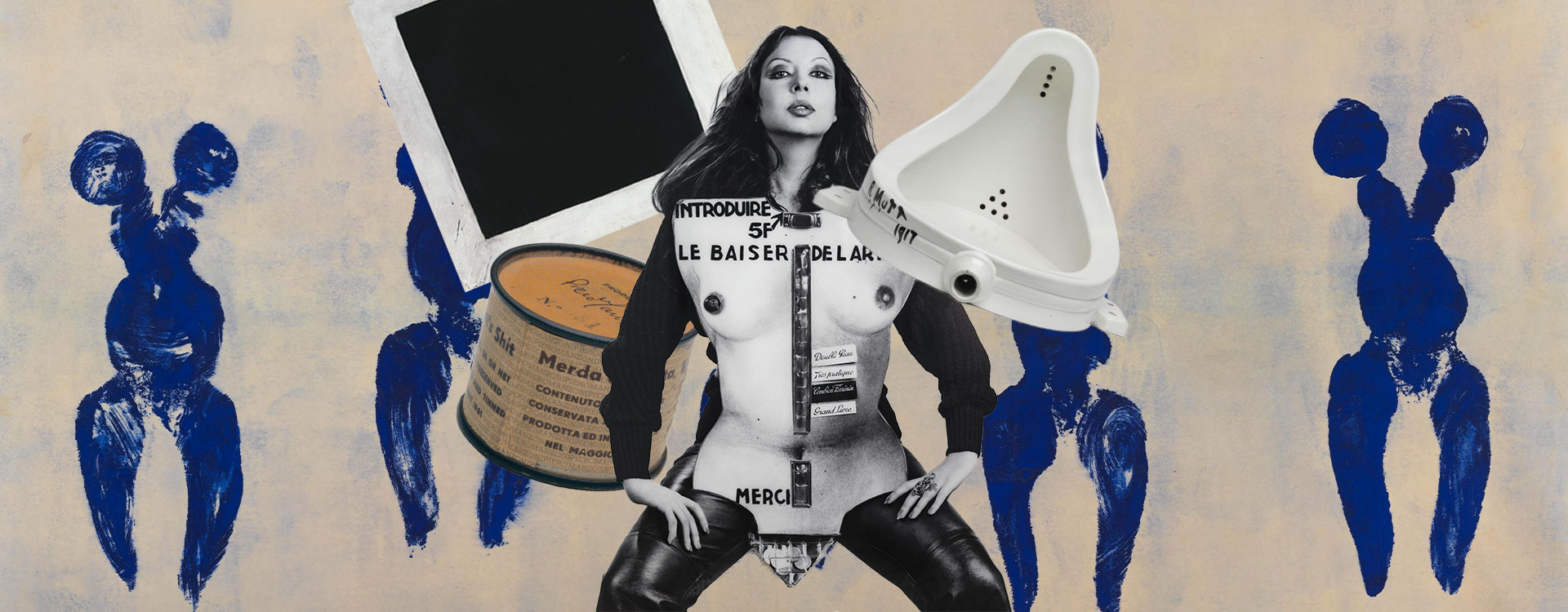
The Art of Scandal: Seven Works from the Centre Pompidou that Changed the World
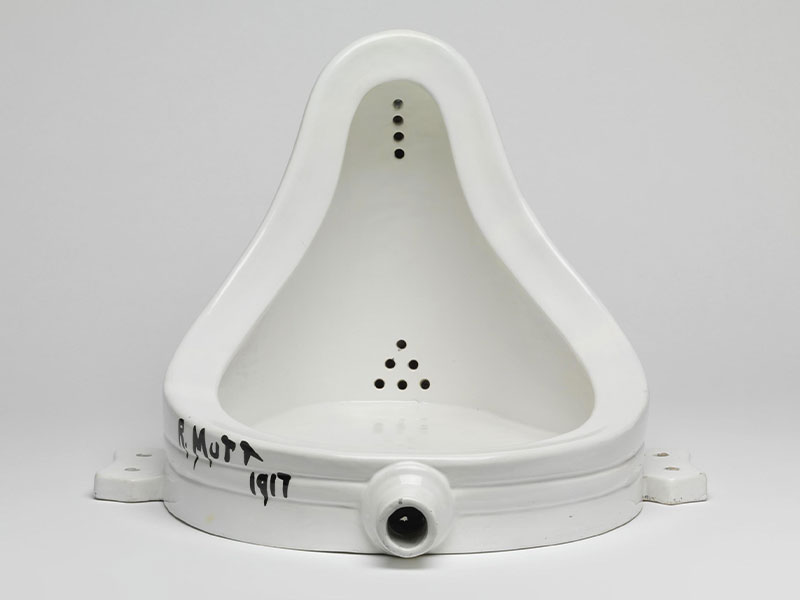
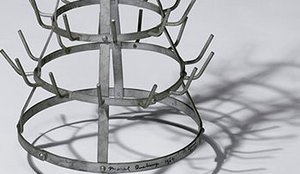
In 1917, Marcel Duchamp (1887–1968) submitted a porcelain urinal, signed “R. Mutt,” to the exhibition of the Society of Independent Artists in New York. The object, purchased from a plumbing store and presented as a work of art, was rejected by the committee.
For many, the idea that a mass-produced item could be considered art was absurd—even offensive.
Duchamp, who was himself a member of the jury, thus tested the consistency of a salon that claimed to be “without prizes or jury”.
The scandal erupted when the piece was eventually displayed and photographed by Alfred Stieglitz, then reproduced in the magazine The Blind Man. “Mr. Mutt took an ordinary article of life, placed it so that its useful significance disappeared under the new title and point of view”, Duchamp commented.
It is the viewer who makes the work of art.
Marcel Duchamp
Fountain is now considered the foundational act of the ready-made and conceptual art. By selecting a banal industrial object—one that could be endlessly reproduced—Duchamp challenged the very definition of art and contributed to the desacralization of the artwork: it was no longer the product of manual skill, but of a choice and a gaze.
This provocation paved the way for decades of reflection on the role of the artist and the value of the artwork. The version preserved at the Centre Pompidou is a 1964 replica: both a practical response to the loss of the original, a conceptual statement (the primacy of the idea over the object), and a strategy for disseminating his work.
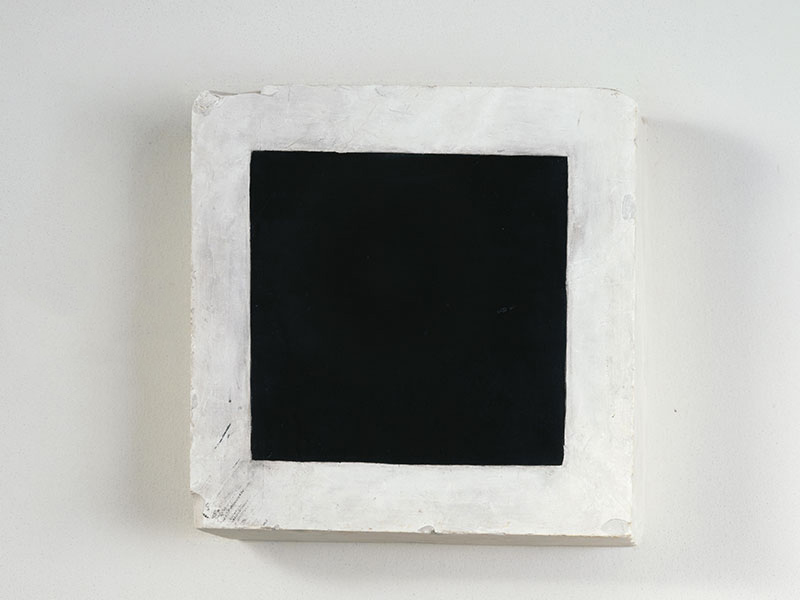
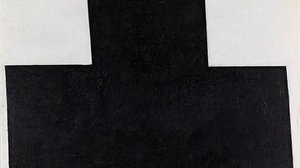
A black square painted on a white background: it is hard to imagine a simpler image. When Kazimir Malevich (1879–1935) unveiled this work in 1915 at the “0,10” exhibition in St. Petersburg, much of the public saw it as a provocation, a negation of painting, or even a sign of artistic decadence. “Can a black square alone be considered art?” many wondered.
Moreover, by placing his painting high in a corner of the room, near the ceiling—like a religious icon—Malevich emphasized the sacred character he attributed to this work.
“After this, what is left to do?” people were already asking in 1916.
For Malevich, a pioneer of abstract art, the square became the fundamental unit of a new pictorial system that freed painting from its figurative burden. This work is the manifesto of Suprematism, a movement seeking to liberate art from all representation of reality.
Malevich explored the idea of a “zero of forms”, a pure abstraction that profoundly influenced modern art. Black Square became the emblem of a spiritual quest and an aesthetic revolution, inspiring generations of abstract artists.
The version held at the Centre Pompidou is a relief reinterpretation of the iconic motif, with the black square slightly offset against the white background, creating a sense of depth.
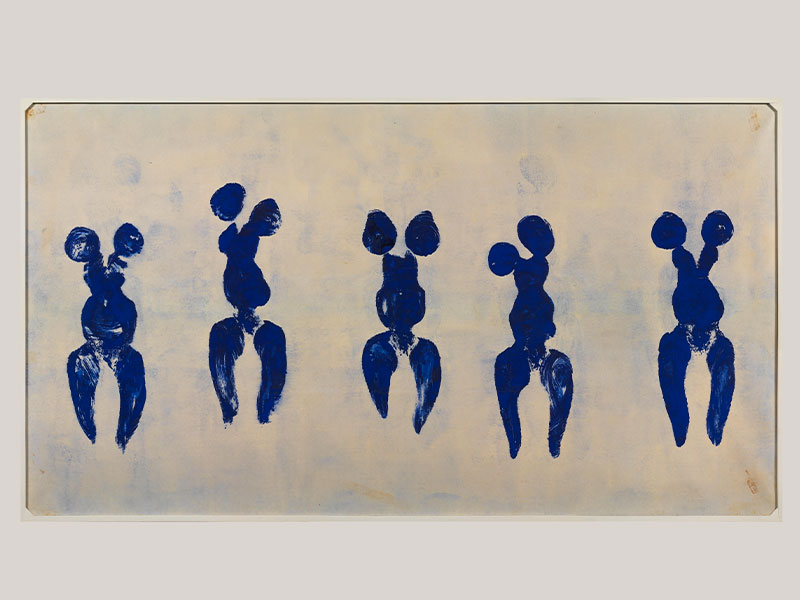
In March 1960, in a Gaullist France still bound by convention, Yves Klein (1928–1962) staged a performance in which nude models, coated in his famous International Klein Blue (IKB), pressed themselves onto canvases before a stunned audience; their imprints became the very substance of the painting.
The artist directed the movements of his “living brushes” without ever touching them. The nudity, theatricality, and audacity of the gesture shocked both conservatives—who deemed the spectacle vulgar—and progressives—who were outraged to see a man dispose of female bodies in this way.
The aesthetic, moral, and cultural scandal was so intense that it pursued the artist until his premature death in 1962, at just 34 years old.
In doing so, one of the founders of Nouveau Réalisme transformed the body into a brush and art into an event; he inspired Body Art and performance art. His Anthropometries explore the trace, the ephemeral, and the place of the body in art; the static model of the studio became an actor—or rather, an actress—fully engaged in the creative process.
Today, these works are celebrated for their poetry and radicalism, and IKB has become a mythical color, a symbol of art that transcends traditional boundaries.
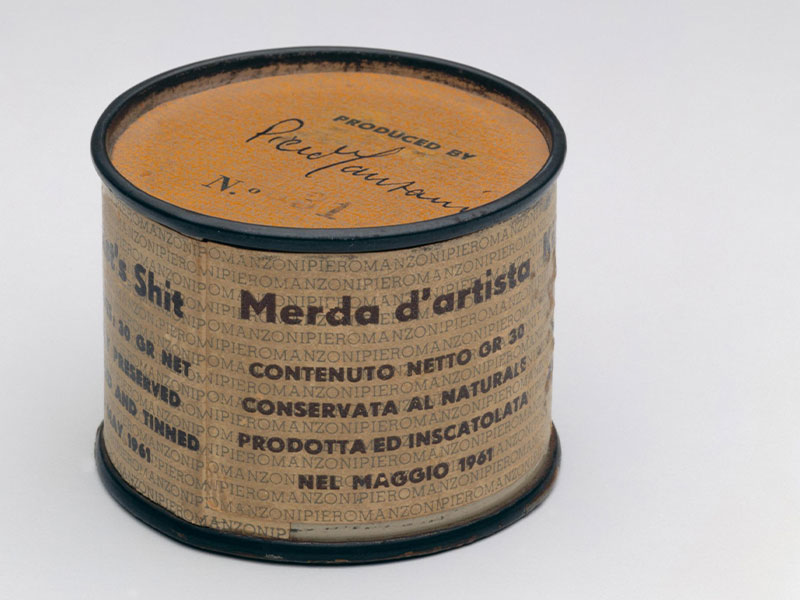
Ninety small metal cans, each supposedly containing thirty grams of the artist’s own excrement, sold daily at the price of gold. That was all it took for the Italian artist Piero Manzoni (1933–1963) to provoke an immediate scandal. How could bodily waste be considered a work of art?
Many denounced it as a gratuitous provocation or an insult to art itself. The press cried hoax, and the work was often seen as a mockery of collectors and institutions.
In May 1961, I produced and packaged 90 cans of “Artist’s Shit” (30 grams each), preserved in its natural state (made in Italy).
Piero Manzoni
Behind the provocative humor lies a sharp critique of the art market. Manzoni questions the value attributed to the artist and their signature. If everything that comes from the artist is precious, then even their waste can become a work of art.
By turning refuse into a collectible object, Manzoni forces us to reflect on what gives an artwork its value: is it the object itself, the idea it carries, or simply the signature of its creator? A question that remains burning in the contemporary art world.
Today, Artist's Shit is studied as a major work of conceptual art, interrogating the commodification of art and the notion of aura.
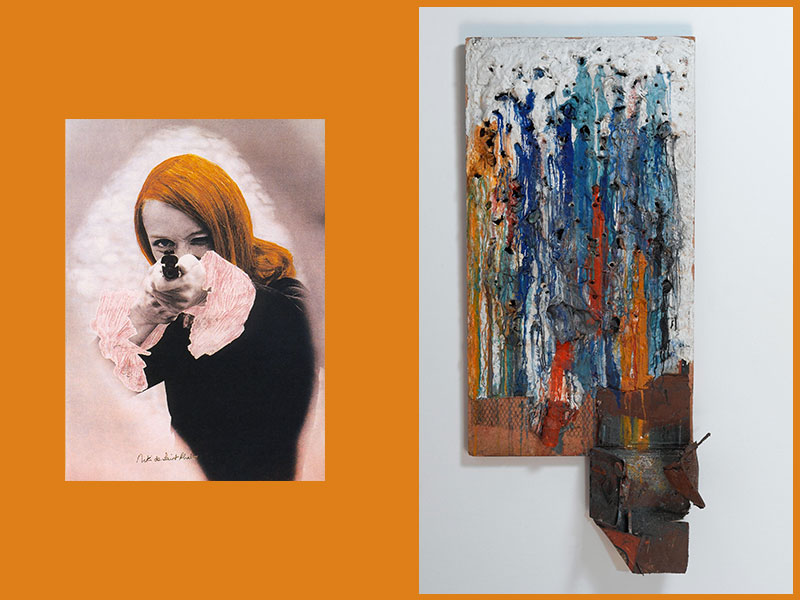
Franco-American artist Niki de Saint Phalle (1930–2002) invited the public to fire a rifle at pouches of paint hidden beneath plaster, creating colorful splatters. “A murder without a victim. I shot because I loved to see the painting bleed and die”, she declared, describing the twelve spectacular performances that took place between 1961 and 1963.
The violence of the act, the public’s participation (including anonymous individuals as well as artists like Robert Rauschenberg and Jasper Johns), and the destructive dimension shocked audiences. The performance was perceived as an attack on the established order and the patriarchal society, seen as the sole holder of violence.
A murder without a victim. I shot because I loved to see the painting bleed and die.
Niki de Saint Phalle
Niki de Saint Phalle’s Shooting Paintings were a feminist and therapeutic performance, where destruction became creation; they were part of the subversion of artistic codes through the happenings that proliferated in the 1960s.
This work foreshadowed participatory art and questioned the role of the audience, making her a major figure in committed contemporary art.
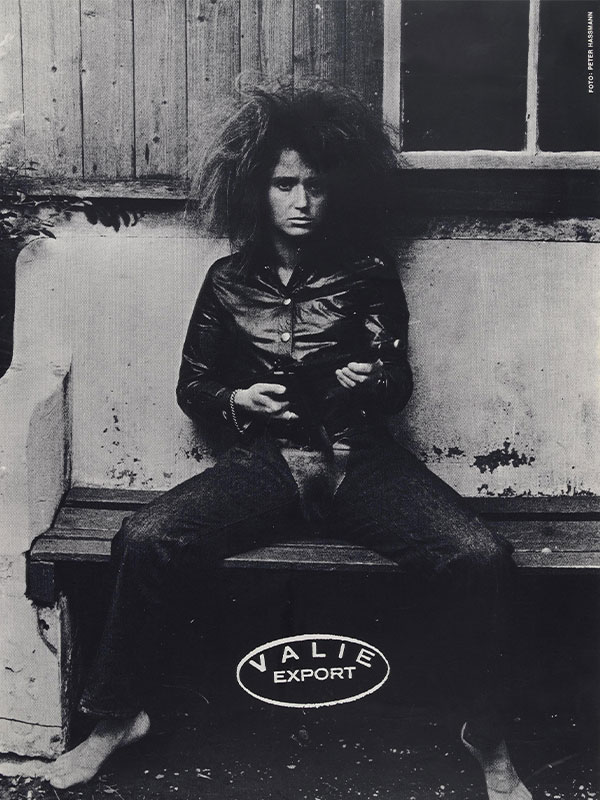
In 1969, the Austrian visual artist VALIE EXPORT (born 1940) burst into a Munich porn cinema wearing pants cut open at the crotch, her genitals exposed, and holding a submachine gun.
Facing an almost exclusively male audience, she pointed her weapon at the spectators and declared: “Here is a real cunt, not an image!” Some fled, others stood petrified—all were shocked.
Here is a real cunt, not an image!
Valie Export
What caused the scandal? Everything. The artist’s audacity, transforming her body into a tool of provocation and reversing roles: the female body, usually a passive object of desire, became an active, threatening subject. Then, the weapon—a symbol of male power—wielded by a woman challenging the authority of the spectators. Finally, the location: a porn cinema, where women are reduced to images, and where VALIE EXPORT imposed a real, raw, and political presence.
With this foundational work of body art and feminism, the artist did more than shock: she forced society to confront what it prefers to hide. Her body became political material; she denounced the objectification of women and asserted their right to occupy public space—both physical and symbolic.
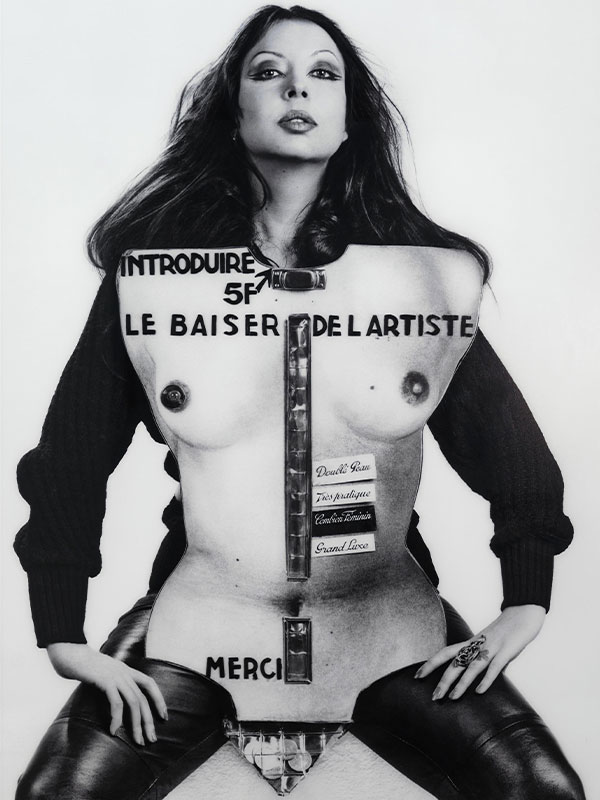
In 1977, at the International Contemporary Art Fair, ORLAN (born 1947) presented a performance as unsettling as it was provocative: The Artist’s Kiss. The public paid for a kiss from the artist, who was dressed as the Virgin Mary.
The reaction was immediate outrage; some saw it as a vulgar commodification of art and the body, while others viewed it as a profanation of religious symbols. ORLAN faced harsh criticism, threats, and even lost her job as an educator.
A real artist’s kiss for five francs. A real one! Ladies and gentlemen, it’s a bargain.
ORLAN
By selling a kiss, the artist denounced the commodification of art while questioning the place of the body—and of women—in creation: neither saint nor prostitute. The blend of religion, sexuality, and commercial transaction made this a subversive and profound work, one that continues to resonate today.
More than just a sensational stunt, The Artist’s Kiss became a major work of body art and performance, marking a turning point in the reflection on the value of art and the role of the artist.
Nearly fifty years later, it remains a reference, reminding us that art can be both an intimate gesture and a political weapon. ◼
Related articles


© Association Marcel Duchamp / Adagp, Paris
© Succession Yves Klein c/o ADAGP Paris
© Niki Charitable Art Foundation / Adagp, Paris
Photographie coll. Sprengel Museum, Hanovre / © BPK, Berlin, Dist. RMN-Grand Palais / image Sprengel Museum
© Centre Pompidou