![[Translate to English:]](/fileadmin/user_upload/bandeau_article_toit.jpg "[Translate to English:]")
Architectural Secrets ► The Centre Pompidou Rooftop
In the 20th century, architect Le Corbusier popularised the term “fifth façade” to describe the roof of a building. While it is not always the part that receives the most attention, at the Centre Pompidou it is something of a highlight. Follow us through the colourful maze of pipes, in a place usually frequented only by pigeons and a few firefighters — with the best view in Paris.
In the 20th century, architect Le Corbusier popularised the term “fifth façade” to describe the roof of a building. While it is not always the part that receives the most attention, at the Centre Pompidou it is something of a highlight.
In one of the most famous passages in The Hunchback of Notre-Dame, Victor Hugo describes “Paris from a bird’s-eye view” in a chapter of the same name. He imagines himself soaring above the buildings of the capital, lyrically describing its streets, monuments, and contours. It is the perfect book to slip into your pocket if you are planning to spend a little time on the roof of the Centre Pompidou.
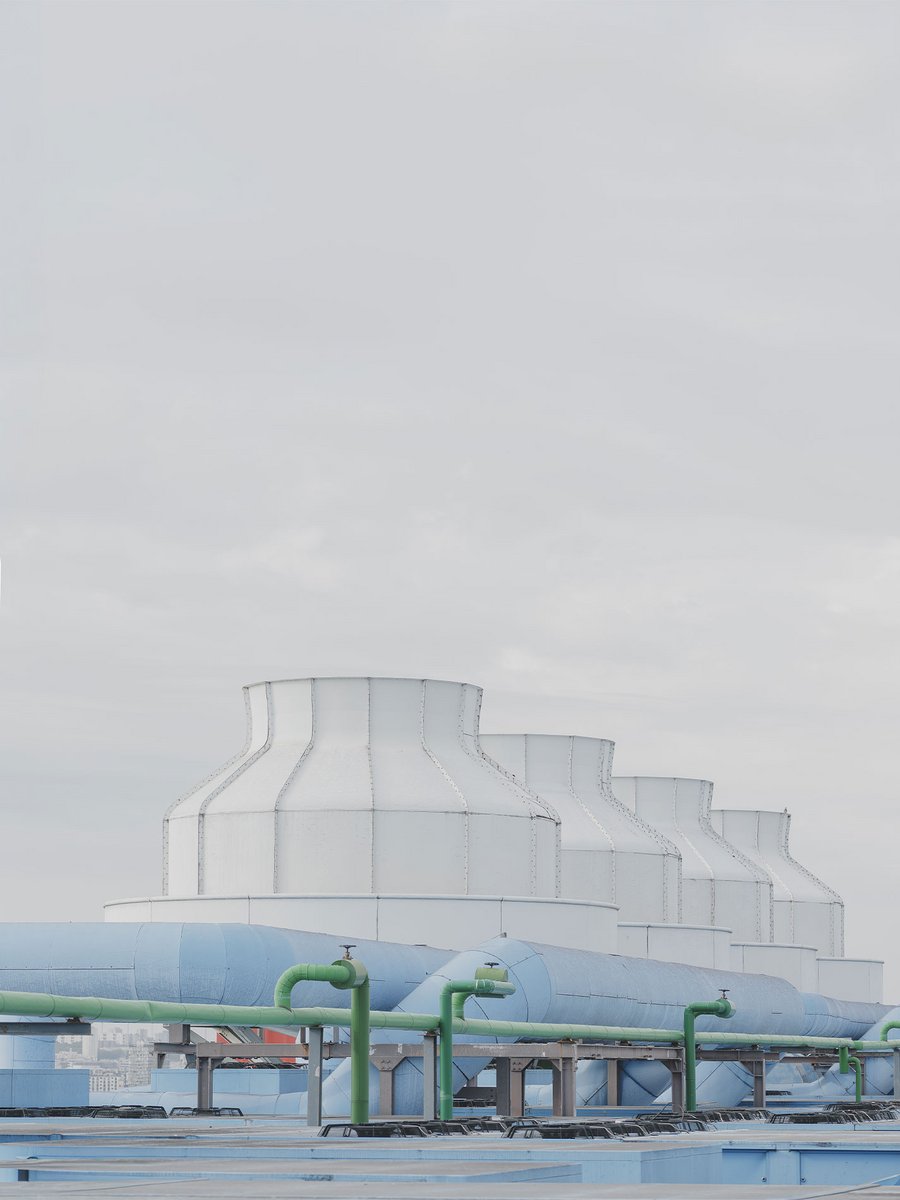
Forty-one metres up, the rooftop is strictly off limits to the public. Its only regular visitors are the Centre Pompidou’s forty firefighters and the maintenance crews who keep everything running. But get past security and step out of the bright-red lift, and the reward is spectacular: one of the most breathtaking views in central Paris. Up here, level with the gargoyles, the whole city comes into view — Notre-Dame’s spire, the dome of the Panthéon, the Mercuriales towers over in Bagnolet, and, further west, the new Triangle tower at Porte de Versailles.
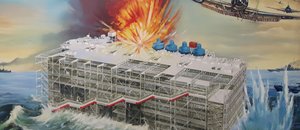
In any case, it was impossible to harmonise this building with the roofline of the previous century. Its function was so new that it could only result in a strange object, a kind of spaceship humming above the clearing where it had landed.
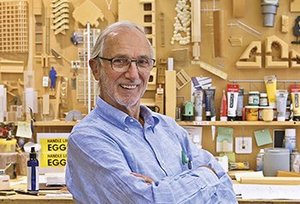
Architects Renzo Piano et Richard Rogers
But there is something else you notice from this height: just how low Paris really is. Stretching out below is the city’s remarkably even sea of grey rooftops — the vélum parisien, or Parisian roofscape — which became a major talking point during the 1971 architectural competition for the future Centre Pompidou. The word vélum, derived from Latin, refers to the average height of the city’s roofs. Mostly covered in zinc, laid by the Parisian roofers and zinc workers whose craft is recognised by UNESCO, this great urban canopy rarely rises above twenty metres, particularly in the historic centre.
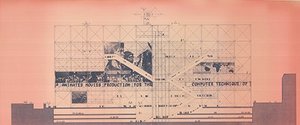
From day one, the Centre Pompidou’s architects, Richard Rogers and Renzo Piano, had no intention of blending in. Looking back in 1987, they put it this way: “In any case, it was impossible to harmonise this building with the roofline of the previous century. Its function was so new that it could only result in a strange object, a kind of spaceship humming above the clearing where it had landed […].” And a spaceship it is.
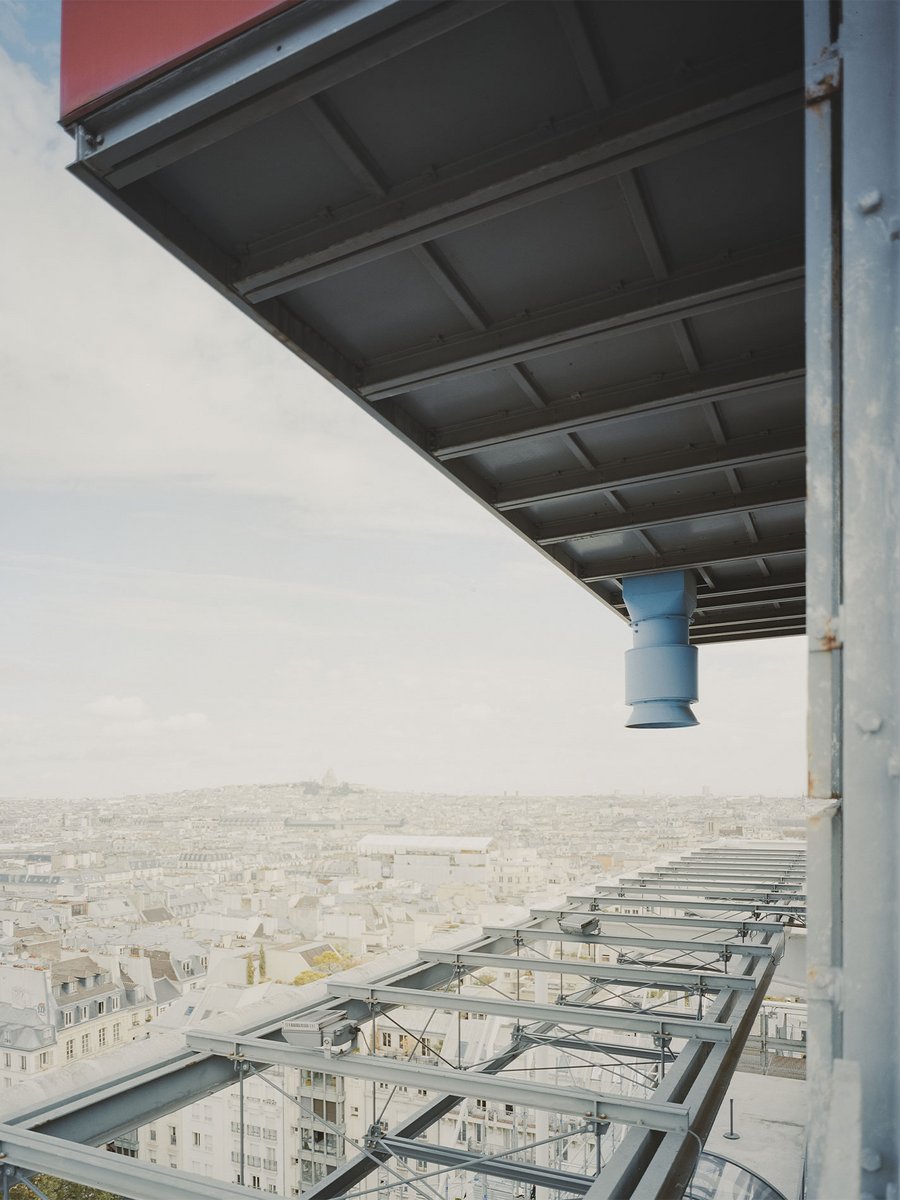
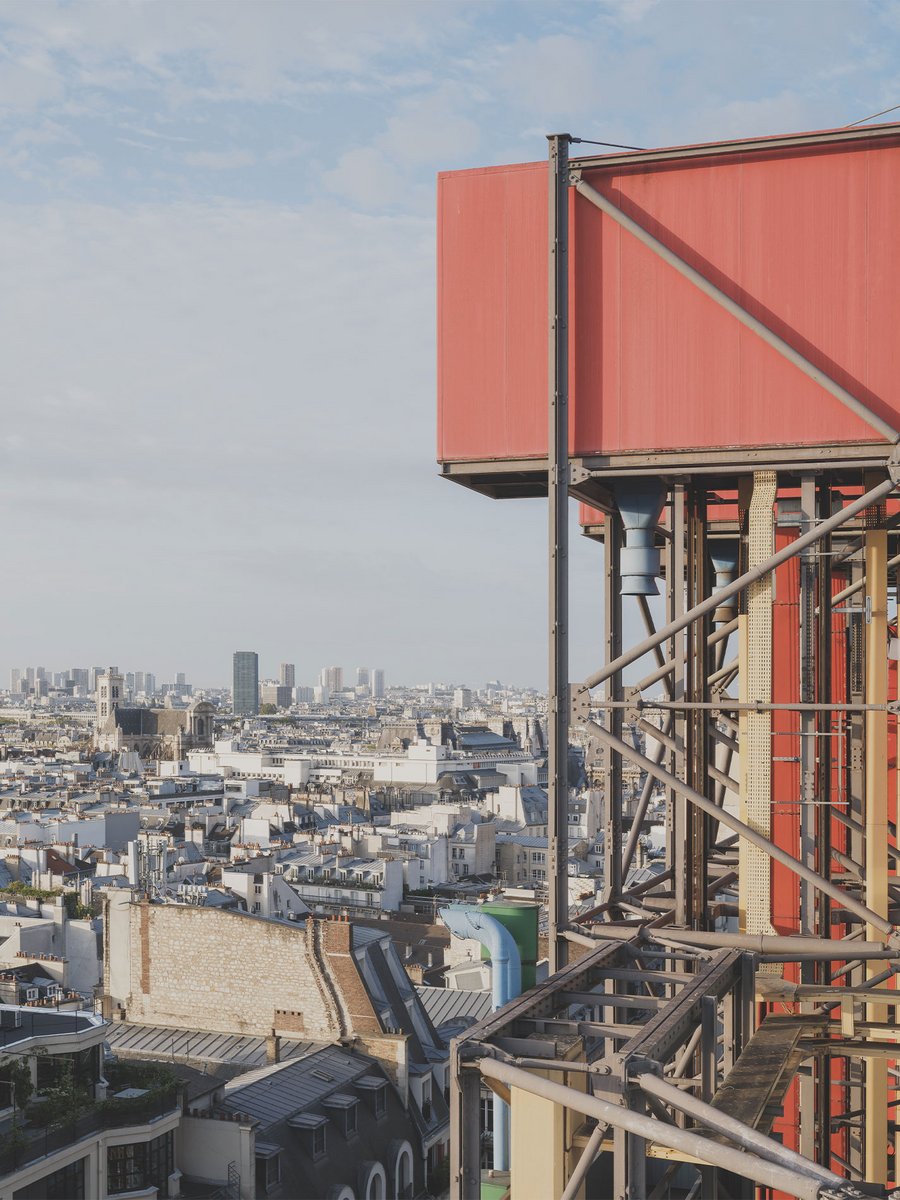
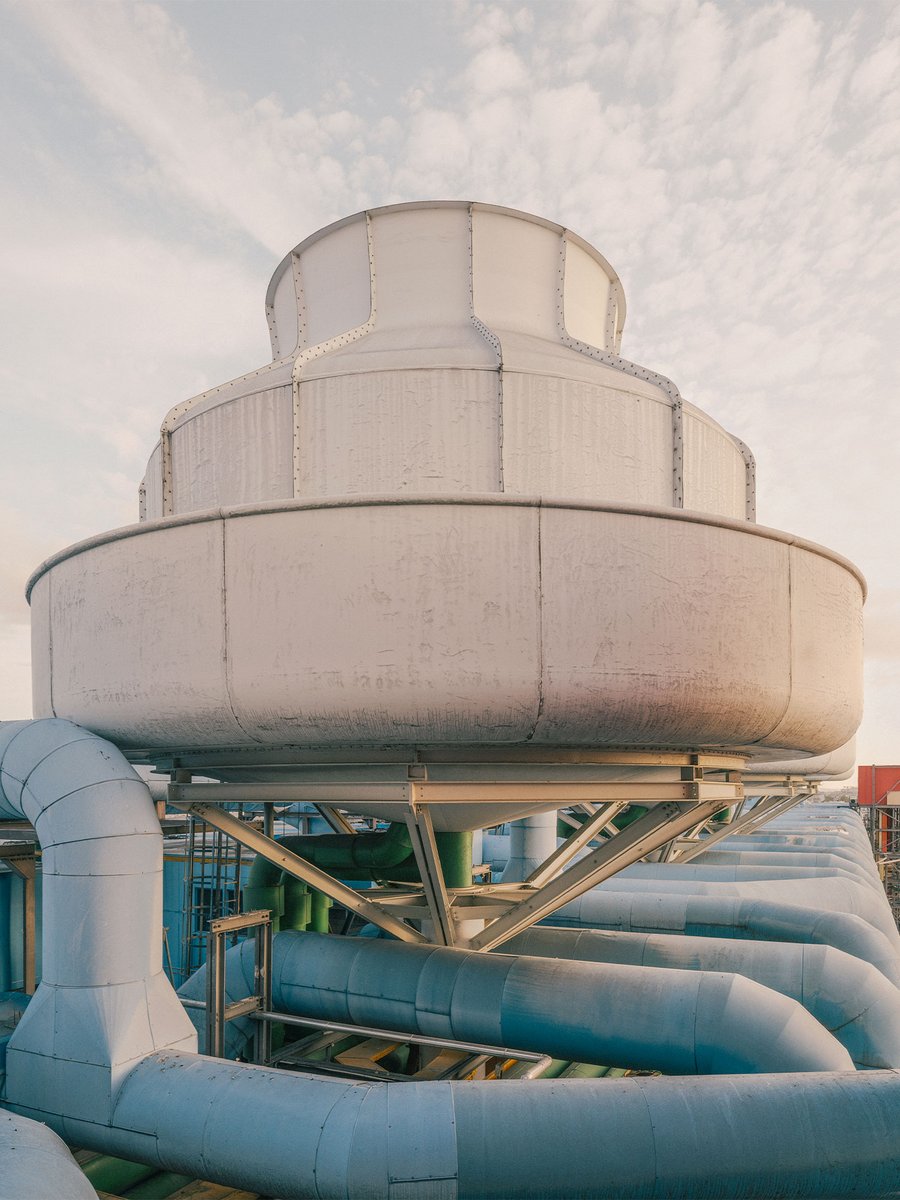
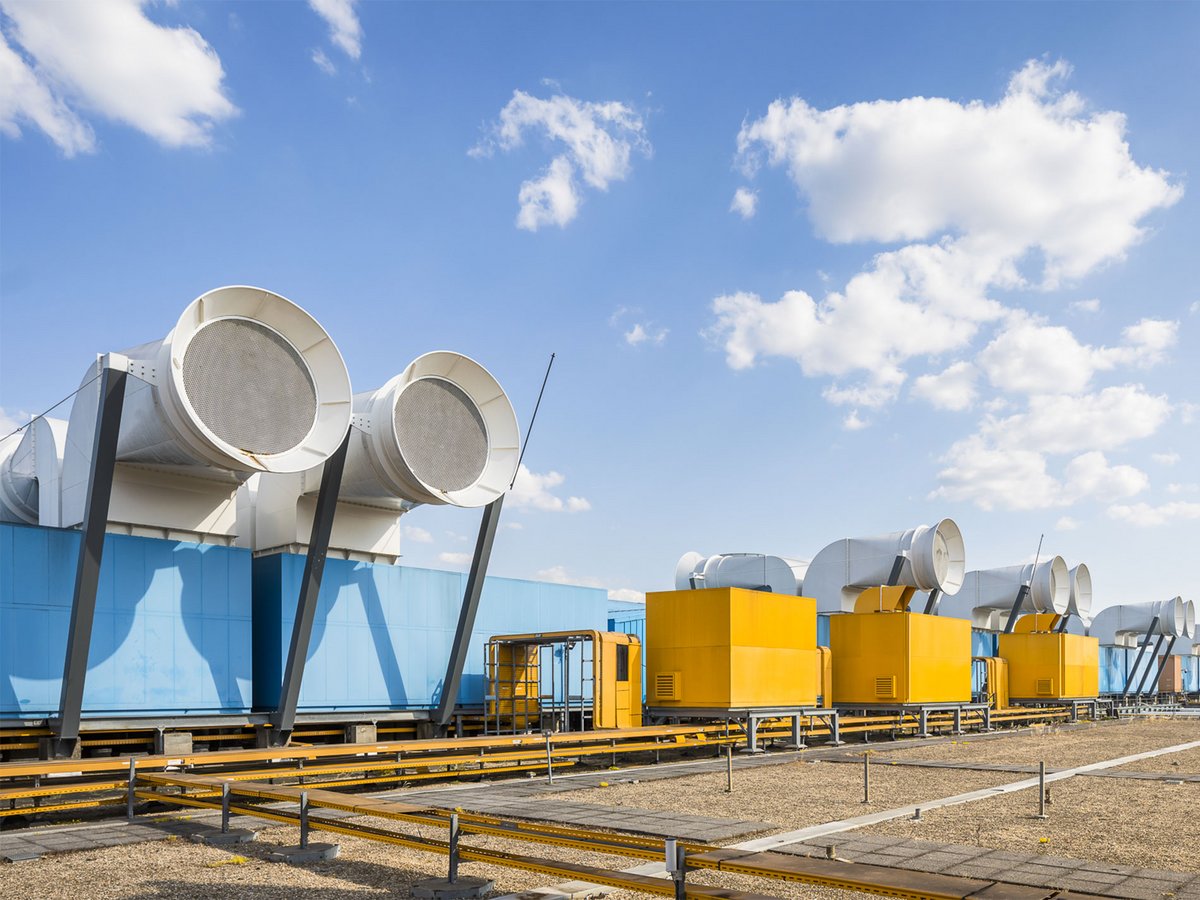
Spectacular views, yes. A leisurely rooftop stroll, not quite. Visitors come equipped with a hard hat — there is plenty to bump your head on — an FFP3 mask to protect against fumes from the pipes, and safety shoes. Suitably kitted out, you can venture into a multicoloured mangrove of pipes, all following the building’s familiar colour code: yellow for electricity, blue for air, green for water, and red for the lifts.
With retro telephones, weather sensors, and cameras everywhere, the rooftop has all the trappings of a space shuttle. And then comes its crowning feature: four monumental cooling towers, rising like sculptures above the building. They keep the Centre Pompidou cool, yet they are white rather than the regulation blue. The reason? President Valéry Giscard d’Estaing was apparently less than keen on such conspicuous splashes of colour and asked for the towers to be painted white, making them less visible on the skyline.
With retro telephones, weather sensors, and cameras everywhere, the rooftop has all the trappings of a space shuttle.
Head towards the Piazza and the landscape gradually opens up. The pipes thin out; the colours recede, until only the elephant-trunk air vents remain, giving the rooftop something of the feel of a cruise liner. Standing here, at the prow, it is easy to see what writer Jean d’Ormesson had in mind when, writing in Le Figaro for the Centre’s opening on 31 January 1977, he described it as “[…] the ocean liner of the future in our silted-up harbours”.
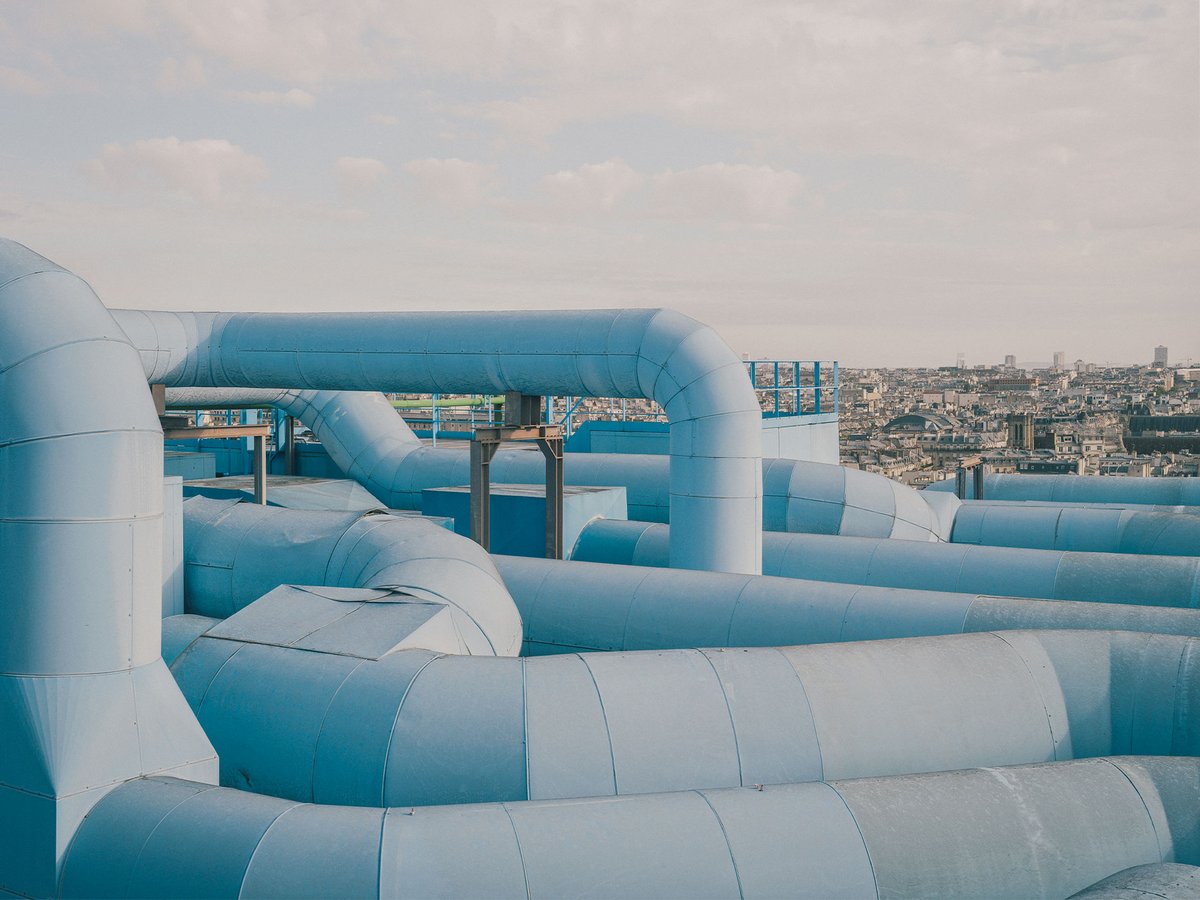
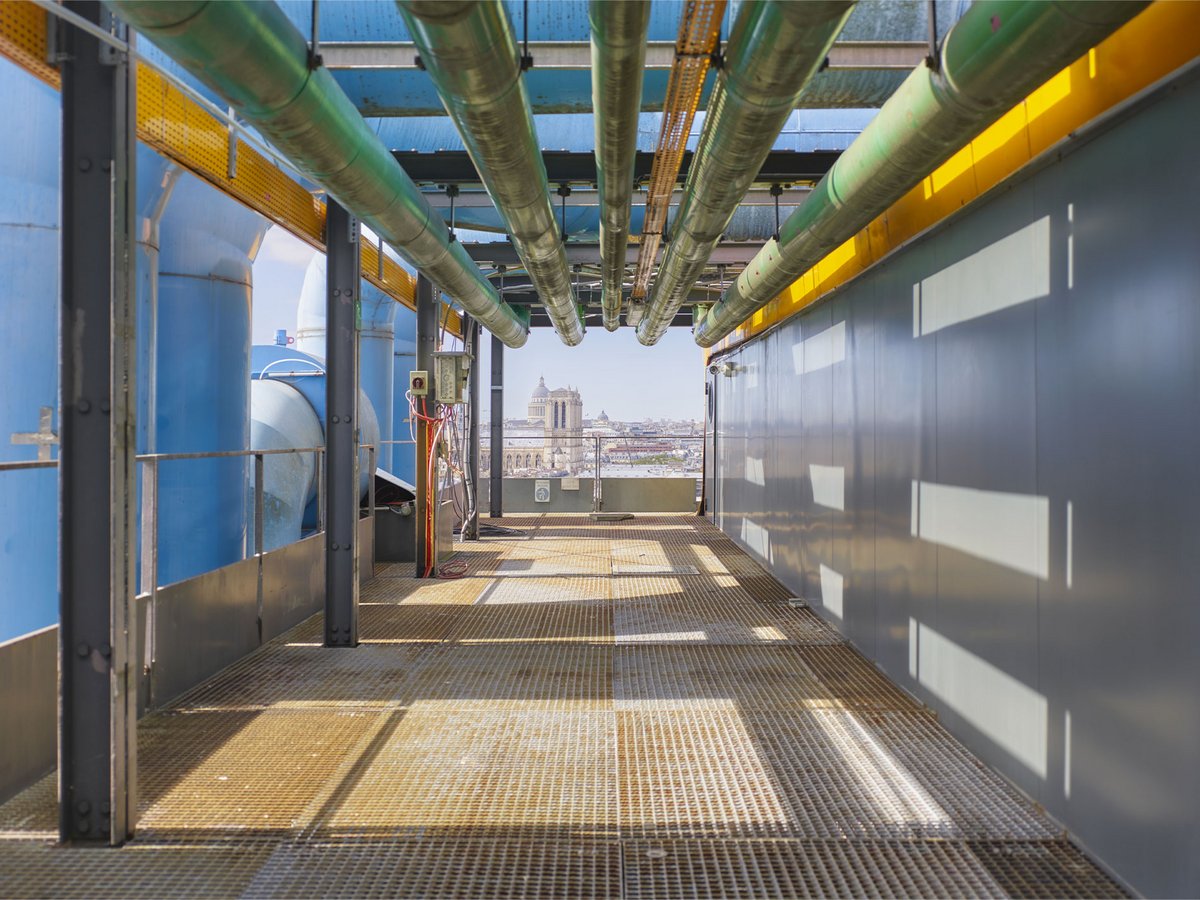
For now, level 6 is as high as visitors can go. But as part of the Centre Pompidou’s ongoing renovation, architects Moreau Kusunoki are about to make a long-held dream a reality: opening the level 7 rooftop terrace to the public.
“It’s the icing on the cake,” said Centre Pompidou president Laurent Le Bon as he unveiled the renovation plans, announcing that “[…] for the first time, [visitors] will have access to the panoramic views over the city and the level 7 terrace”.
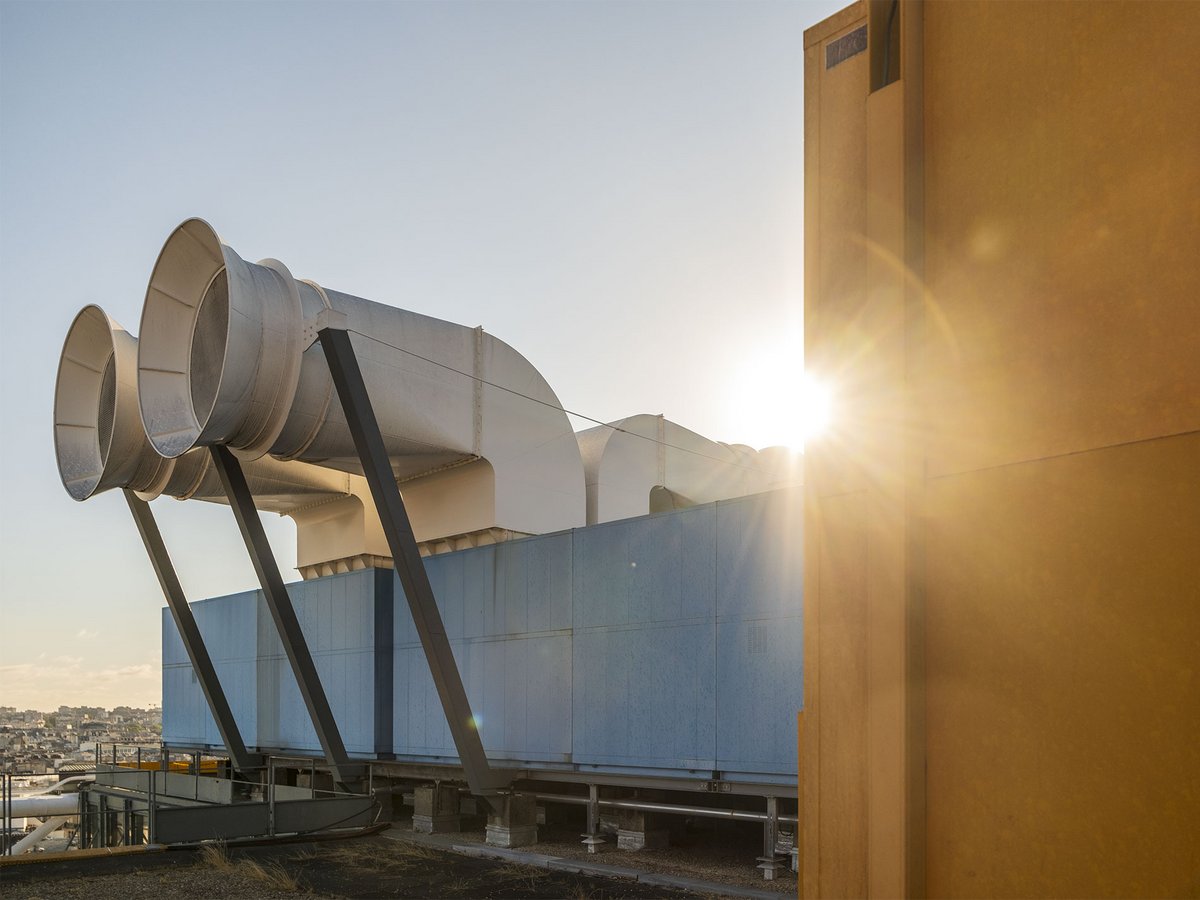
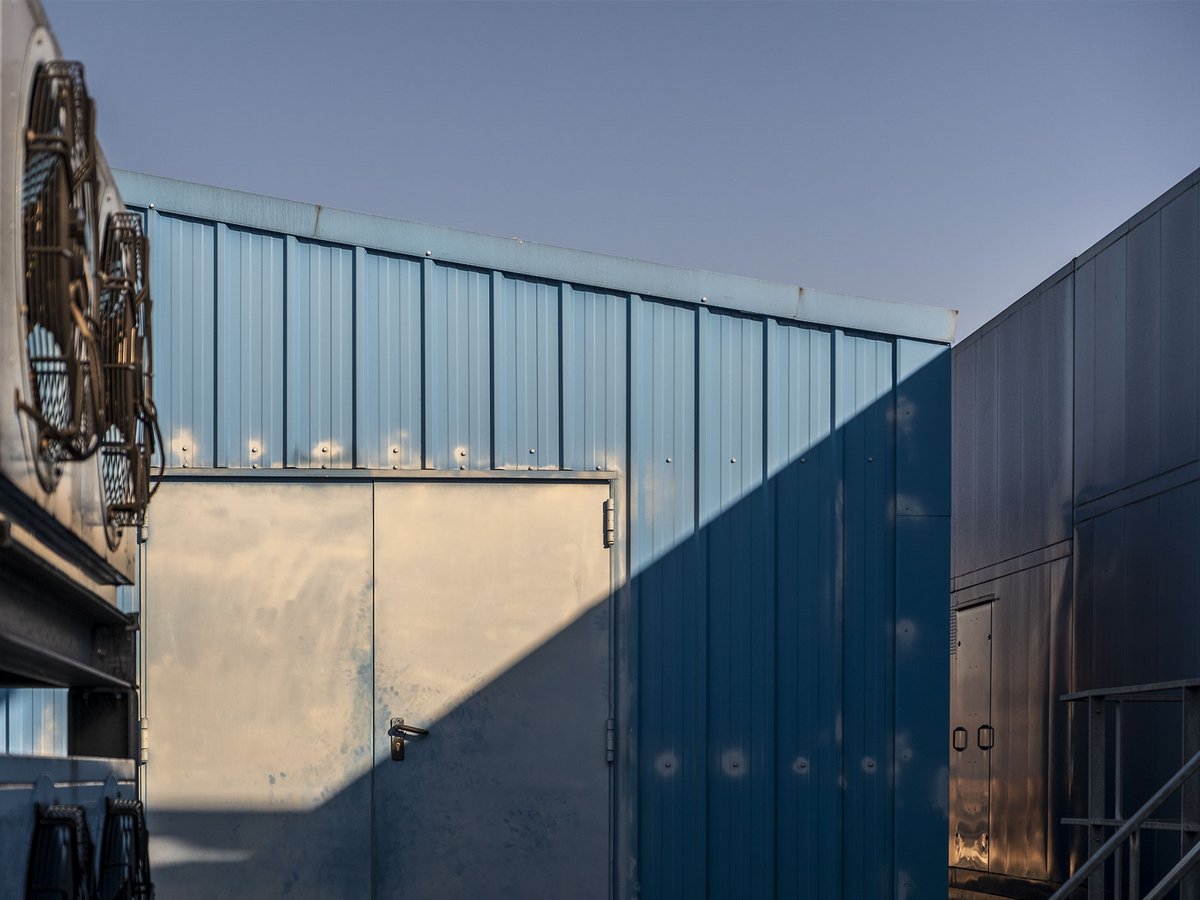
Soon, Pompidou fans will be able to take in the view just a few metres from all that machinery. But architects Nicolas Moreau and Hiroko Kusunoki are clear about one thing: “The roof can’t take any additional weight, so we won’t be building anything up there. We can add lightweight elements and temporary installations, but above all, we don’t want to alter the skyline!”
They continue: “Being up there alongside all those machines will be an incredible discovery for everyone. The roof may not originally have been designed with visitors in mind, but I don’t think opening it up to the public goes against the spirit of the project.” So, a few more years to wait before we can all head up there and enjoy what may well be the finest panoramic view in Paris. Something worth shouting from the rooftops. ◼
Related articles
An illustrated article featuring previously unpublished photographs by Charly Broyez, Jérôme Épaillard, Fabrice Fouillet and Alexis Paoli.
Header photo by Sergio Grazia.